
Large Battery Storage Systems: Engineering, Grid Integration & Industrial Solutions
The global energy transition hinges on one critical infrastructure element: large battery storage systems. These multi-megawatt assets are no longer ancillary components but the backbone of modern grids, enabling renewable firming, peak shaving, and black-start capabilities. Unlike small-scale commercial units, utility-grade storage demands holistic engineering—from cell-level electrochemistry to site-wide control architecture. With over 80 GWh of grid-scale installations projected annually by 2030, understanding the technical nuances, safety imperatives, and economic models behind these systems is essential for utilities, developers, and industrial energy managers.
As a specialized energy storage solution provider, CNTE (Contemporary Nebula Technology Energy Co., Ltd.) delivers turnkey large-scale battery storage platforms designed for harsh environments, high cycling demands, and complex grid codes. This article dissects the core technologies, application archetypes, and engineering strategies that define today’s industrial storage landscape.
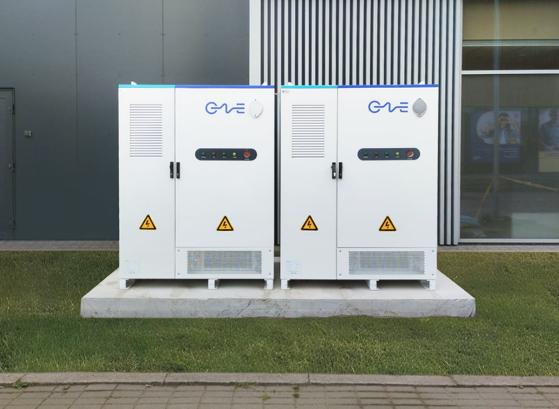
Table of contents cntepower 1 1. Core Technology Stack: From Cell Chemistry to System Orchestration 1.1 1.1 Lithium-Ion Chemistries: LFP vs. NMC in High-Power Applications 1.2 1.2 Advanced Battery Management Systems (BMS) 1.3 1.3 Thermal Management and Safety Engineering 2 2. Key Applications Driving Market Growth 3 3. Solving Industry Pain Points with Holistic Engineering 3.1 3.1 High Upfront Capital Expenditure 3.2 3.2 Safety Risks and Thermal Runaway Containment 3.3 3.3 Degradation Prediction and Warranty Structuring 3.4 3.4 Interconnection Complexity and Grid Codes 4 4. Economic Viability and Revenue Stacking Models 5 5. Safety, Standards, and Certifications: Meeting Global Compliance 6 6. Future Outlook: Second-Life, Solid-State, and AI-Optimized Fleets 7 Conclusion: Selecting the Right Partner for Industrial-Scale Storage 8 Frequently Asked Questions (FAQ) 8.1 Q1: What is the typical lifespan of a utility-scale large battery storage system? 8.2 Q2: What certifications are required to interconnect a large battery storage system to the grid? 8.3 Q3: How do large battery storage systems contribute to renewable energy integration? 8.4 Q4: Can existing large battery storage systems be scaled or expanded after initial deployment? 8.5 Q5: What are the main operational costs after installation? 8.6 Q6: How do large battery storage systems handle extreme temperatures?
1. Core Technology Stack: From Cell Chemistry to System Orchestration
Any industrial large battery storage system is a symphony of interdependent subsystems. Achieving 20-year service life with >90% round-trip efficiency requires rigorous selection across four layers.
1.1 Lithium-Ion Chemistries: LFP vs. NMC in High-Power Applications
Two dominant cathode chemistries compete in the utility sector: Lithium Iron Phosphate (LFP) and Nickel Manganese Cobalt (NMC). LFP offers superior thermal runaway threshold (~270°C vs 150°C for NMC) and cycle life exceeding 8,000 cycles at 80% depth of discharge (DoD). NMC provides higher energy density (200–250 Wh/kg vs 120–160 Wh/kg), making it preferable where footprint is constrained. For grid-scale projects prioritizing safety and longevity, LFP-based large battery storage systems now constitute over 65% of new utility contracts. CNTE’s flagship product line adopts prismatic LFP cells with passive cell balancing and multi-layer fire barriers, achieving UL9540A thermal runaway propagation compliance.
1.2 Advanced Battery Management Systems (BMS)
The BMS acts as the neurological center, monitoring voltage, temperature, and current at cell level. Modern distributed BMS architectures reduce single-point failure risks and enable real-time state-of-health (SoH) estimation with<2% error.="" key="" metrics="" tracked="" include:="">
Cell voltage imbalance thresholds (typically
<15mv).<>
Internal resistance growth for predictive failure alerts.
Thermal gradient control across racks (±2°C).
Predictive algorithms leveraging machine learning can extend battery bank useful life by 15–20%, directly impacting levelized cost of storage (LCOS).
1.3 Thermal Management and Safety Engineering
For multi-MW installations, thermal dissipation is a primary safety and performance variable. Liquid cooling systems now dominate over forced-air designs, offering a 30% reduction in auxiliary power consumption and maintaining cell temperature within a 25–35°C window across all operational states. Combined with gas detection (H₂, CO) and aerosol-based fire suppression, these systems comply with NFPA 855 and international IEC 62933-5 standards. Independent third-party testing confirms that properly engineered liquid-cooled large battery storage systems achieve >99.5% availability in extreme climates.
2. Key Applications Driving Market Growth
The versatility of industrial storage allows asset owners to stack multiple revenue streams. Below are the primary deployment scenarios where system architecture must align with operational requirements.
Grid Frequency Regulation & Synthetic Inertia: Fast-responding storage (sub-100ms) replaces traditional spinning reserves. Systems must handle up to 4,000 annual full-cycle equivalents. Grid-forming inverters enable black-start capability, crucial for islanded microgrids.
Renewables Capacity Firming: Co-located solar+storage projects use DC-coupled architectures to minimize clipping losses, improving plant capacity factor by 12–18% in high-penetration markets.
Commercial & Industrial Peak Shaving: Large industrial facilities deploy behind-the-meter storage to reduce demand charges, with system sizing typically 2–10 MWh, leveraging energy arbitrage under time-of-use rates.
Transmission & Distribution Deferral: Utilities install storage at substations to alleviate congestion, deferring costly upgrades by 5–7 years while enhancing reliability.
Microgrids and Critical Infrastructure: Hospitals, data centers, and military bases require N+1 redundant storage with seamless islanding transitions. Modular architectures enable scalability from 1 MW to 100 MW+.
In each scenario, the large battery storage systems must be configured with appropriate power-to-energy ratios (C-rates), grid interconnection equipment, and control logic. CNTE’s pre-engineered skid-mounted solutions include factory integration testing (FAT), reducing on-site commissioning time by up to 40% compared to traditional custom builds.
3. Solving Industry Pain Points with Holistic Engineering
Despite rapid adoption, project developers face persistent challenges that separate successful deployments from stranded assets. Addressing these requires both hardware innovation and software-defined intelligence.
3.1 High Upfront Capital Expenditure
While battery cell costs have fallen by 85% over the past decade, balance-of-system (BOS) components—cabling, enclosures, transformers, and labor—now account for 35–45% of total project cost. Standardized containerized designs reduce engineering overhead and accelerate permitting. CNTE employs modular 20‑ft and 40‑ft ISO containers with integrated medium-voltage transformers, reducing BOS costs by approximately 18% on large-scale tenders.
3.2 Safety Risks and Thermal Runaway Containment
Incidents in early-generation installations have tightened regulatory scrutiny. Modern best practices include:
Cell-level fusing and flame-retardant barriers.
Zone-based fire suppression with water mist or Novec 1230 agents.
Continuous remote monitoring with 24/7 response centers.
Compliance with UL9540A (cell-to-propagation testing) is now mandatory for insurance coverage and interconnection agreements in North America and Europe.
3.3 Degradation Prediction and Warranty Structuring
Investors demand performance guarantees—typically 80% retained capacity after 10 years or 6,000 cycles. Advanced digital twins simulate usage patterns and recommend state-of-charge (SoC) windows to minimize calendar aging. By incorporating AI-driven operations, CNTE provides 15-year performance warranties, backed by real-time SoH tracking.
3.4 Interconnection Complexity and Grid Codes
Each grid operator mandates specific IEEE 1547-2018, IEC 61727, or local compliance tests. Pre-certified inverter skids with standard protection relay packages shorten the interconnection study phase by months. CNTE’s engineering team supports full grid model validation, ensuring that large battery storage systems meet harmonic distortion, ride-through, and reactive power requirements across 50+ countries.
4. Economic Viability and Revenue Stacking Models
Storage assets are no longer valued solely on energy arbitrage. Advanced software platforms optimize participation in multiple markets simultaneously. Key revenue mechanisms include:
Energy arbitrage: Charging during low-price hours (e.g., solar midday) and discharging during peak evening periods. Margins range from $20–$80/MWh depending on market volatility.
Frequency regulation (PJM, CAISO, etc.): Fast-responding assets can earn $6–$12/kW-month, representing up to 40% of total revenue in mature markets.
Capacity payments: Utilities and ISOs pay for resource availability during peak demand periods. Typical capacity revenues range from $5–$15/kW-year.
Resilience-as-a-service: Critical facilities sign long-term contracts for guaranteed backup power, monetizing standby value.
Modern energy management systems (EMS) use stochastic optimization to bid into wholesale markets, increasing asset net present value (NPV) by 15–25% compared to rule-based control. CNTE’s integrated EMS platform combines on-site SCADA with cloud-based asset monetization, providing a unified interface for owners to capture these stacked values.
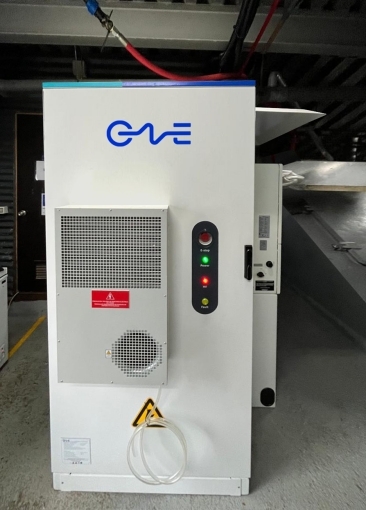
5. Safety, Standards, and Certifications: Meeting Global Compliance
Professional procurement mandates rigorous adherence to international and regional standards. Below are the pivotal certifications that indicate a bankable storage partner.
UL 9540 / UL 9540A: System-level safety and thermal runaway propagation testing. Required for installations in the US and many export markets.
IEC 62619 / 63056: Safety requirements for industrial batteries, covering mechanical, electrical, and environmental testing.
NFPA 855: Installation standard for stationary energy storage, defining spacing, ventilation, and fire suppression criteria.
ISO 13849 / IEC 61508: Functional safety for control systems, ensuring fail-safe operation during grid anomalies.
CNTE’s manufacturing facilities hold ISO 9001, ISO 14001, and ISO 45001 certifications, and all large battery storage systems are fully tested under IEC and UL protocols before shipment. This commitment reduces owner’s risk and expedites insurance underwriting.
6. Future Outlook: Second-Life, Solid-State, and AI-Optimized Fleets
Innovation continues to redefine the value proposition of industrial storage. Three trends will dominate the next five years:
Second-life battery integration: Retired EV packs, properly screened and recombined, can serve low-C-rate applications (e.g., backup power) at 40% lower upfront cost. Standardization of BMS interfaces is critical to scaling this circular economy.
Solid-state batteries: With projected commercial availability by 2028–2030, solid-state cells promise >500 Wh/kg and elimination of flammable liquid electrolytes. Early prototypes show >10,000 cycles, dramatically lowering LCOS.
AI-driven fleet optimization: Federated learning across thousands of distributed storage assets enables predictive maintenance and real-time market bidding at millisecond intervals, boosting portfolio revenues by an estimated 12–18%.
As the industry converges on interoperable standards (e.g., OCPP 2.0.1, SunSpec Modbus), the ability to orchestrate heterogeneous large battery storage systems becomes a core competency. CNTE is actively developing a hardware-agnostic orchestration platform that aggregates third-party storage assets into virtual power plants (VPPs), unlocking new grid service markets.
Conclusion: Selecting the Right Partner for Industrial-Scale Storage
Deploying large battery storage systems requires more than component selection—it demands a partner with end-to-end capability: from cell characterization and safety engineering to grid compliance and lifecycle asset management. With proven installations across utility, mining, and manufacturing sectors, CNTE offers vertically integrated solutions that bridge hardware reliability with intelligent energy software. Whether the goal is decarbonizing industrial operations, enhancing grid resilience, or maximizing merchant revenues, a systematic engineering approach remains the only sustainable path forward.
Frequently Asked Questions (FAQ)
Q1: What is the typical lifespan of a utility-scale large battery storage system?
A1: Industrial systems using LFP chemistry routinely achieve 8,000–12,000 cycles at 80% depth of discharge, equating to 15–20 years of service when paired with advanced thermal management. Warranty structures typically guarantee 80% remaining capacity at the end of 10 years or 6,000 cycles. Calendar aging factors, such as average temperature and state-of-charge management, also influence longevity. CNTE’s digital twin monitoring provides capacity fade forecasts with ±2% accuracy, allowing proactive maintenance planning.
Q2: What certifications are required to interconnect a large battery storage system to the grid?
A2: Grid interconnection requirements vary by region but commonly include IEEE 1547-2018 (North America), IEC 61727 (global), and G99/G100 (UK). Additionally, utility-specific protection schemes must be validated via power system studies (short-circuit, stability). Fire safety certifications such as UL 9540 and NFPA 855 compliance are prerequisites for permitting in most jurisdictions. CNTE provides a comprehensive certification package, including factory witness testing and site commissioning reports to streamline interconnection.
Q3: How do large battery storage systems contribute to renewable energy integration?
A3: They solve the intermittency challenge by storing excess solar or wind generation during periods of low demand and discharging during peak hours or low renewable output. This process—often called time-shifting or capacity firming—improves the capacity factor of solar farms by 10–20% and enables wind farms to provide dispatchable power. Furthermore, storage provides synthetic inertia and voltage support, allowing grids to host higher shares of inverter-based renewables without stability compromises.
Q4: Can existing large battery storage systems be scaled or expanded after initial deployment?
A4: Yes, modular architectures allow capacity expansion by adding additional battery containers connected to a shared point of interconnection (POI). However, the original power conversion system (PCS) and transformer must be sized for future growth. CNTE’s skid designs incorporate spare feeder breakers and communication ports to facilitate seamless expansion. DC-coupling on the renewable side also simplifies incremental capacity additions without major electrical retrofits.
Q5: What are the main operational costs after installation?
A5: Primary ongoing expenses include:
Energy costs: Charging electricity, typically the largest variable cost.
Operations & maintenance (O&M): Annual contracts covering remote monitoring, on-site inspections, filter cleaning, and periodic testing. For a 50 MWh system, O&M ranges from $8,000–$15,000 per MW-year.
Insurance: Premiums based on safety certifications and project track record.
Software licenses: EMS platforms with market bidding capabilities may have monthly subscription fees.
CNTE offers full-scope O&M packages, including 24/7 remote operations center support and guaranteed uptime SLAs.
Q6: How do large battery storage systems handle extreme temperatures?
A6: Modern systems integrate liquid-cooled thermal management that maintains optimal operating temperature (15–35°C) across ambient ranges from -30°C to 55°C. For desert environments, active cooling systems with redundant chillers are deployed; for arctic climates, insulated enclosures with integrated heating pads prevent electrolyte freezing. CNTE’s systems undergo climatic chamber testing to verify performance under IEC 60068-2 environmental standards, ensuring reliable operation in any geography.
For detailed specifications, project references, or to discuss a custom energy storage solution, visit CNTE or explore their portfolio of large battery storage systems engineered for the next decade of energy infrastructure.
Get in Touch
Recent Posts
-
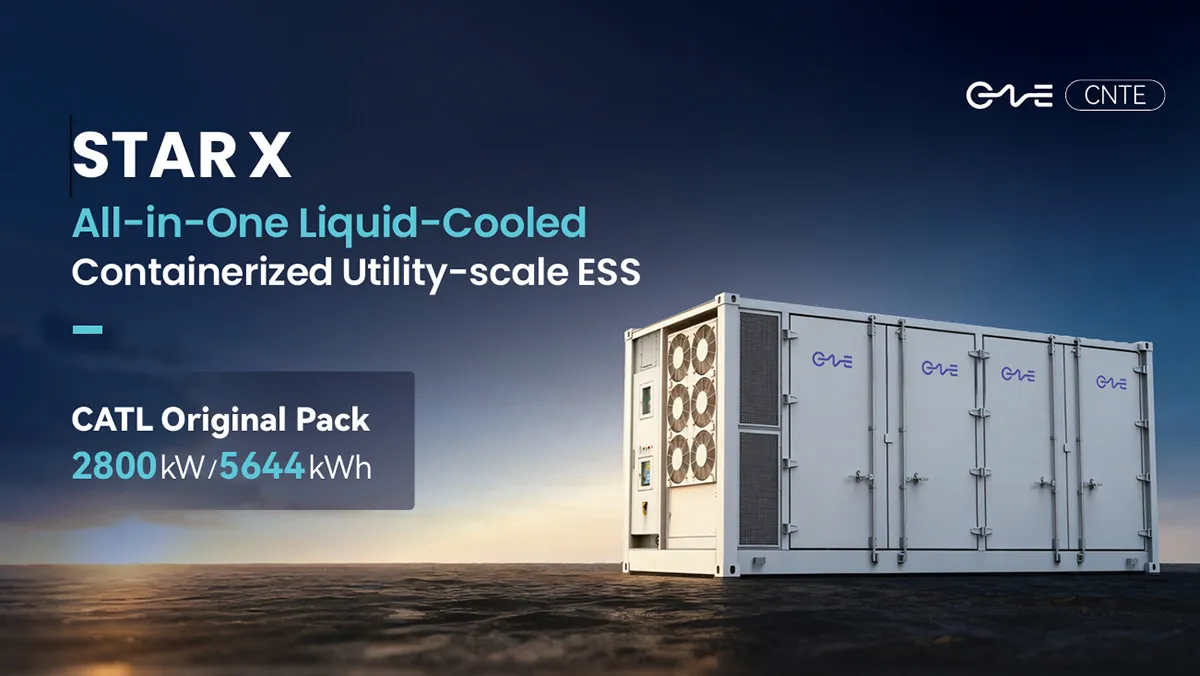
CNTE Launches STAR X Liquid-Cooled DC/AC Integrated Energy Storage System at Intersolar Europe 2026
Jul 06, 2026 -
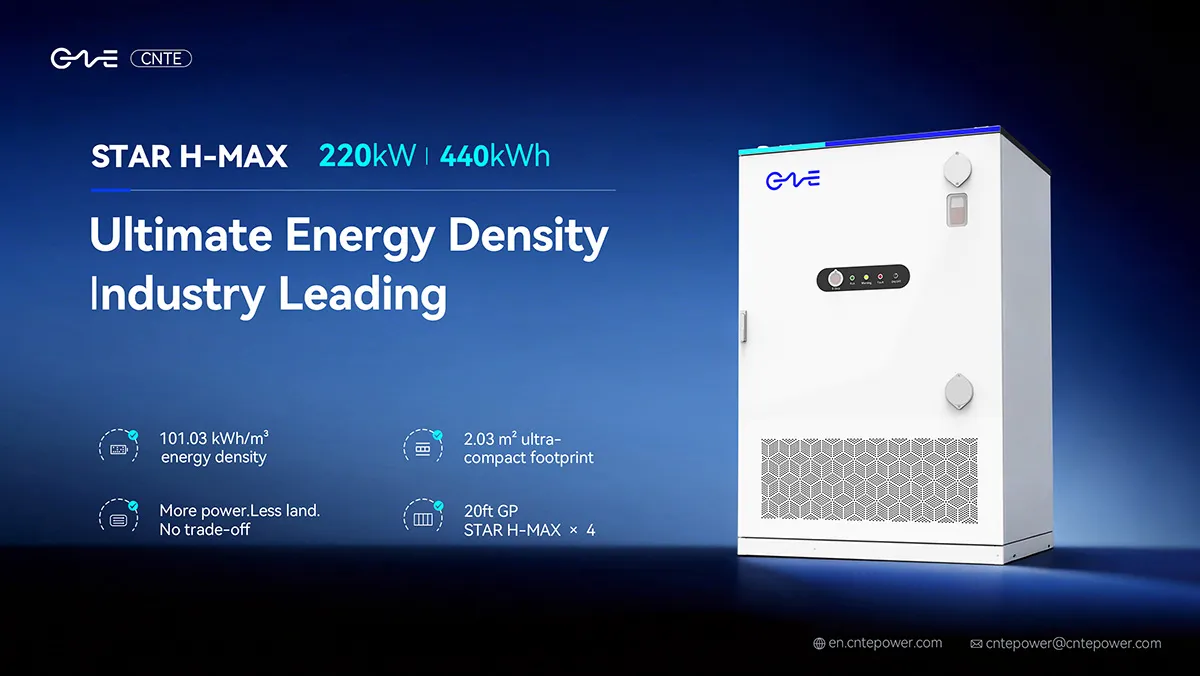
CNTE Unveils New STAR H-MAX Liquid-Cooled C&I ESS at Intersolar Europe 2026
Jun 23, 2026 -
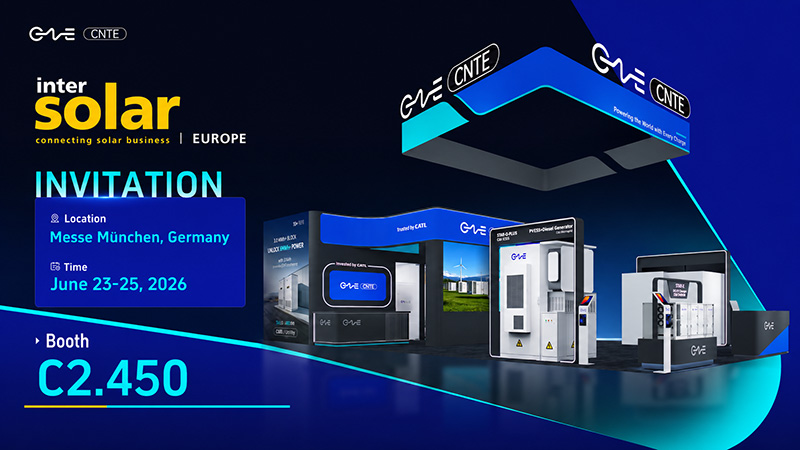
CNTE to Participate in Intersolar Europe 2026
May 20, 2026 -
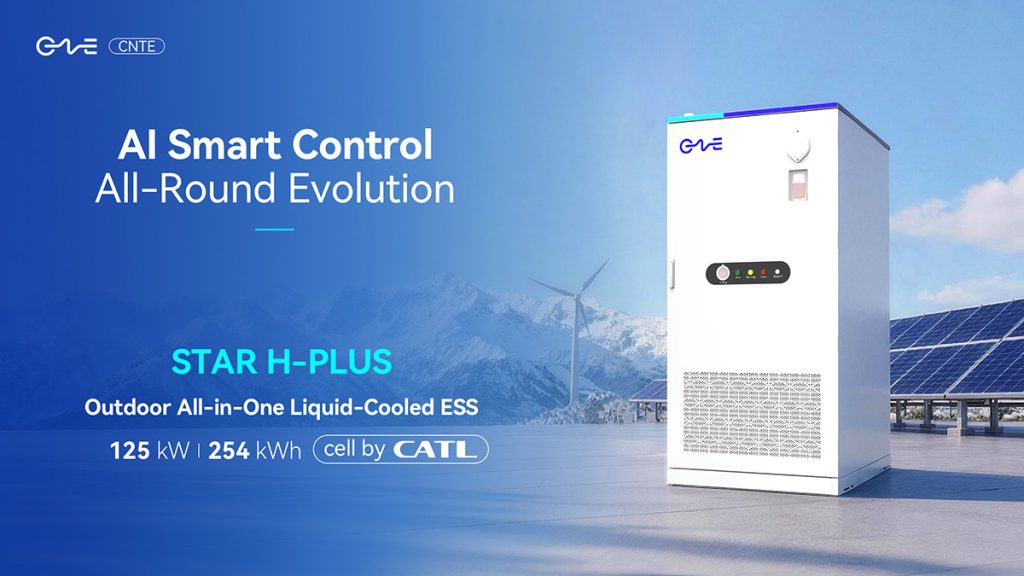
CNTE at KEY ENERGY 2026: Showcases STAR H-PLUS Outdoor Liquid-Cooled Energy Storage System
Mar 05, 2026 -

CNTE Honored as 2025 Forbes China Leading Global Brand
Jul 06, 2026 -

CNTE & YOU.ON Partner to Expand Storage Markets
May 19, 2025 -

CNTE Unveils Energy Storage Lineup at Solartech 2025
May 19, 2025 -
CNTE awarded AEO certification
Jul 06, 2026 -
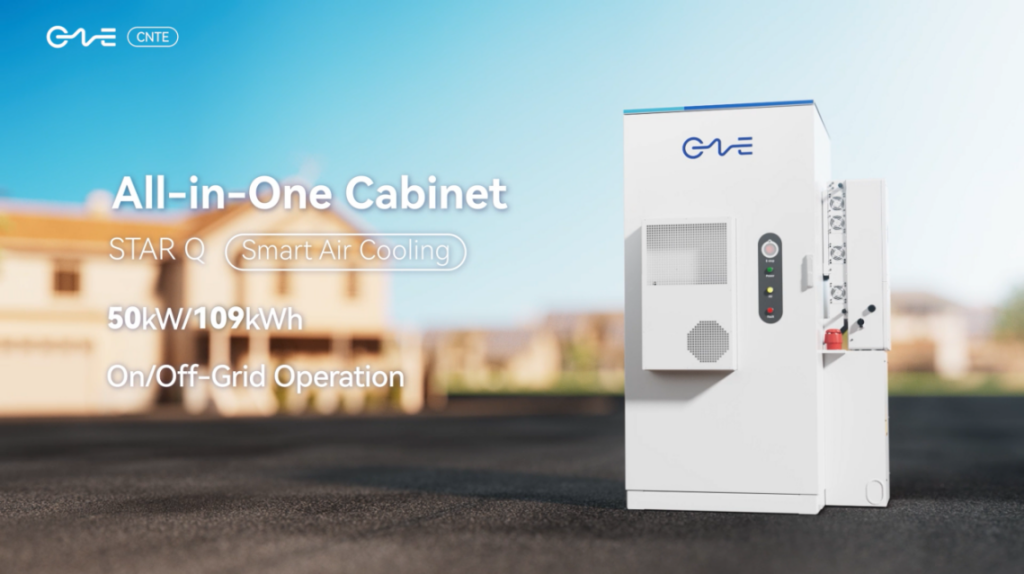
CNTE New Product Launch STAR Q
Jan 15, 2025 -

CNTE Named to Forbes China 2024 Top 30 Go-International Brands
Jul 06, 2026
