
Battery Storage Solutions Solar: 8 Technical and Financial Considerations for Commercial & Industrial Projects
Commercial and industrial (C&I) facilities increasingly pair photovoltaic (PV) arrays with energy storage to improve self-consumption, reduce demand charges, and provide backup capability. However, not all battery storage solutions solar are engineered equally. This article dissects eight critical dimensions: system architecture (DC-coupled vs. AC-coupled), component selection, economic modeling, sizing methodology, hybrid operation with existing generators, safety compliance, advanced controls, and lifecycle management. Field data from manufacturing sites, warehouses, and commercial buildings inform the recommendations below.

1. Why Solar-Plus-Storage Requires Dedicated Battery Storage Solutions Solar
Standard solar inverters cannot manage the bidirectional power flows, state-of-charge (SoC) optimization, or grid export limitations needed for effective storage integration. Dedicated battery storage solutions solar include a purpose-built battery management system (BMS), a bidirectional power conversion system (PCS), and an energy management system (EMS) that coordinates PV generation, load consumption, and battery dispatch. Without these three layers, facilities experience either curtailed solar energy (when production exceeds load) or unnecessary utility purchases during evening peaks.
2. DC-Coupled vs. AC-Coupled Architectures
Two primary topologies exist for integrating storage with solar. Each has distinct efficiency, cost, and retrofit implications.
2.1 DC-Coupled Systems
In a DC-coupled architecture, the battery shares a common DC bus with the solar charge controller. A single hybrid inverter converts DC to AC for loads or grid export. This configuration achieves higher round-trip efficiency (typically 94–96%) because solar energy can charge the battery without an extra DC-AC-DC conversion. However, DC coupling requires that the battery voltage matches the PV string voltage, which limits modularity. It is best suited for new installations where the solar array and battery are designed together.
2.2 AC-Coupled Systems
AC-coupled systems connect the battery to the facility’s existing AC bus via a standalone bi-directional inverter. The solar inverter and battery inverter operate in parallel on the AC side. This architecture is simpler for retrofits because the existing PV system remains untouched. Round-trip efficiency is slightly lower (90–93%) due to double conversion (DC-AC for solar to load, then AC-DC for battery charging, then DC-AC for discharge). However, AC coupling offers greater flexibility in sizing and allows the battery to provide backup power even if the solar inverter shuts down during a grid outage. For most retrofit projects, AC-coupled battery storage solutions solar are the practical choice.
3. Economic Drivers: Self-Consumption, Peak Shaving, and Arbitrage
A properly configured solar+storage system generates value through three primary mechanisms.
- Increased self-consumption: Without storage, a C&I solar array may export 30–50% of its generation to the grid at low feed-in tariffs (often 20–30% of retail rates). Storage captures excess solar and discharges it during evening hours, raising self-consumption to 80–90%.
- Peak demand shaving: Many utilities impose demand charges (USD 15–40 per kW) based on the highest 15- or 30-minute average load in a billing cycle. The battery discharges during short-duration load spikes (e.g., from HVAC or machinery) to flatten the peak, reducing monthly demand charges by 25–40%.
- Time-of-use (ToU) arbitrage: Where ToU tariffs have high on-peak and low off-peak rates (ratio of 3:1 or higher), the battery can charge from the grid or solar during off-peak hours and discharge during peak hours, capturing the price difference.
Field data from over 150 C&I solar+storage installations shows combined savings of USD 0.12–0.25 per kWh of battery throughput, with payback periods ranging from 3.0 to 5.5 years depending on local tariffs and incentives.
4. Sizing Methodology for Commercial Solar+Storage Systems
Correct sizing avoids underperformance (frequent deep cycles, premature aging) or overcapitalization. Engineers use two complementary methods.
4.1 Solar Self-Consumption Sizing
Using 15-minute interval data from the facility’s solar production and load profiles, calculate the daily surplus energy (PV generation minus load during daylight hours). The battery’s usable energy capacity (kWh) should cover 80–100% of the average daily surplus. For example, a facility with 1,200 kWh of average daily solar surplus and a target self-consumption of 90% requires approximately 1,000 kWh of usable storage. Note that usable capacity is 80–90% of nameplate capacity depending on depth-of-discharge limits (DoD).
4.2 Peak Shaving Sizing
Identify the top 10–20 peak demand events over a 12-month period. The required battery power rating (kW) equals the difference between the actual peak and a target peak threshold. Energy capacity is determined by the duration of the peak event (typically 1–3 hours). For facilities with short-duration spikes (e.g., 15 minutes), a smaller energy capacity with high C-rate (2C–4C) suffices. For longer peaks (e.g., from EV charging), a duration of 2–4 hours is needed.
CNTE (Contemporary Nebula Technology Energy Co., Ltd.) provides site-specific energy audits that combine both methods, delivering a recommended battery power (kW) and energy (kWh) specification with an optimized ROI.
5. Hybrid Operation with Existing Generators – No Replacement Required
Many C&I facilities already own diesel or gas generators for backup power. A solar+storage system can operate in parallel with these assets, extending generator life and reducing fuel consumption—without discarding the generator.
- Start delay: During a grid outage, the battery provides instantaneous power for the first 10–30 seconds, allowing the generator to start without abrupt load application. This avoids voltage dips and reduces generator start stress.
- Load smoothing: When the generator runs, large motor starts can cause frequency drops. The battery injects current to stabilize the microgrid, allowing the generator to operate at a steady 70–80% load – its most efficient point.
- Fuel reduction: By using solar and stored energy during daylight hours, the generator runs only when necessary, cutting fuel consumption by 40–60% in microgrid applications.
This hybrid model respects existing capital investments and improves overall system reliability. CNTE’s hybrid control platform manages seamless transition between solar, battery, and generator modes.

6. Safety and Compliance for Integrated Solar+Storage Systems
Any commercial battery storage solutions solar must meet rigorous safety standards. Key certifications include:
- UL 9540 (system-level safety for energy storage)
- UL 1973 (battery modules)
- UL 1741 SA (grid-support utility interactive inverters)
- NFPA 855 (installation and fire protection requirements)
- IEC 62619 (safety for industrial lithium batteries)
Fire risk mitigation measures include cell-level thermal fuses, independent gas detection (CO, H₂, VOC) with forced ventilation, and fire suppression using clean agents (Novec 1230 or FM-200). For rooftop or ground-mount installations in seismic zones, specify enclosures meeting IBC 2018 seismic certification and IP55/NEMA 3R environmental protection.
Additionally, rapid shutdown devices (per NEC 2017/2020) must be installed on the solar DC side to de-energize conductors within 30 seconds for firefighter safety. The battery system should include a remotely activated disconnect (circuit breaker or contactor) accessible from the utility meter location.
7. Advanced Controls and Energy Management
Basic solar+storage systems operate on simple rules (e.g., charge from solar, discharge at 6 PM). Advanced battery storage solutions solar incorporate an EMS with predictive analytics.
- Load forecasting: The EMS learns historical load patterns and weather data to predict next-day consumption and solar generation.
- Price signal integration: Where real-time or day-ahead market prices are available, the EMS optimizes charge/discharge to capture arbitrage without compromising peak shaving.
- Battery health management: The EMS avoids deep discharges (below 10–20% SoC) and high C-rate cycles that accelerate capacity fade, extending battery life to 10–12 years.
- Grid export limitation: In jurisdictions with zero-export rules, the EMS throttles solar inverter output or charges the battery to prevent any reverse power flow.
Field data shows that EMS-optimized systems generate 18–28% higher annual savings compared to rule-based controllers, primarily through better demand charge avoidance and capture of intra-day price volatility.
8. Lifecycle Costs and Degradation Modeling
Lithium-ion batteries (LFP chemistry preferred for C&I) degrade over time due to calendar aging (time-based capacity loss) and cycle aging (throughput-based loss). A typical premium LFP cell retains 70–80% of nameplate capacity after 6,000 cycles at 80% DoD, or 10 years of daily cycling. For economic modeling, assume:
- First-year capacity fade: 2–3% (higher due to initial stabilization)
- Subsequent annual fade: 0.5–1.5% per year
- End of life defined as 70% state-of-health (SOH)
The levelized cost of storage (LCOS) for LFP-based solar+storage ranges from USD 0.08–0.15 per kWh, depending on system size and utilization. When combined with solar self-consumption savings (avoided grid purchases at USD 0.12–0.30/kWh), the LCOS is competitive without subsidies. Adding demand charge reduction improves the business case further.
Frequently Asked Questions (FAQ)
Q1: What is the typical payback period for battery storage solutions solar in a commercial facility?
A1: For a typical 500 kW / 1,000 kWh system paired with solar, payback periods range from 3.5 to 5.5 years, depending on local demand charges (USD 15–30/kW) and retail electricity rates. Facilities with high peak demand (>500 kW) and ToU tariffs with on-peak/off-peak ratios above 3:1 see shorter paybacks of 2.5–4 years.
Q2: Can battery storage solutions solar work with my existing diesel generator?
A2: Yes. A hybrid controller coordinates the generator, solar inverter, and battery. During a grid outage, the battery provides instant power while the generator starts (10–30 seconds). Once the generator is online, the battery can charge from solar or support loads, allowing the generator to run at an efficient, steady load. This reduces fuel consumption by 40–60% and extends generator life. No generator replacement is required.
Q3: What safety certifications should I look for when purchasing a solar+storage system?
A3: Demand UL 9540 (system), UL 1973 (modules), and UL 1741 SA (inverter). For fire safety, require NFPA 855 compliance and third-party thermal runaway propagation testing (e.g., cell-to-cell no propagation). For outdoor installations in extreme climates, IP55/NEMA 3R rating and integrated HVAC are necessary.
Q4: How do I size the battery for my existing solar array?
A4: First, analyze your 15-minute interval data for solar generation and facility load over 12 months. Calculate the average daily surplus (solar minus load during sun hours). Size usable battery capacity to cover 80–100% of that surplus. For example, if daily surplus averages 400 kWh, select a battery with 400–500 kWh usable capacity (nameplate capacity of 450–550 kWh, assuming 90% DoD). For peak shaving, size power rating to cover the top demand spike above your target threshold.
Q5: What is the difference between DC coupling and AC coupling, and which is better for retrofits?
A5: DC coupling shares a common DC bus between solar and battery, achieving 94–96% round-trip efficiency but requires a hybrid inverter and is best for new builds. AC coupling adds a standalone battery inverter to an existing solar system; efficiency is 90–93%, but it is much simpler for retrofits and offers more flexible expansion. For most existing solar arrays, AC-coupled battery storage solutions solar are recommended.
Q6: How long do solar+storage batteries last, and what maintenance is needed?
A6: Premium LFP batteries last 10–12 years with daily cycling, retaining 70–80% of original capacity. Maintenance includes annual infrared scanning of electrical connections, calibration of BMS current sensors (every 3 years), air filter cleaning for forced-air cooling, and remote firmware updates. The solar array requires module cleaning and inverter checks per manufacturer guidelines.
Ready to evaluate battery storage solutions solar for your commercial or industrial facility?
The engineering team at CNTE (Contemporary Nebula Technology Energy Co., Ltd.) provides site-specific solar+storage audits, 15-minute interval load analysis, and financial modeling including local incentives and demand tariff structures. Submit your project specifications through our technical inquiry portal to receive a preliminary system design, ROI projection, and hybrid generator integration plan within 5 business days.
Get in Touch
Recent Posts
-

CNTE at KEY ENERGY 2026: Showcases STAR H-PLUS Outdoor Liquid-Cooled Energy Storage System
Mar 05, 2026 -

CNTE Honored as 2025 Forbes China Leading Global Brand
Nov 12, 2025 -

CNTE & YOU.ON Partner to Expand Storage Markets
May 19, 2025 -

CNTE Unveils Energy Storage Lineup at Solartech 2025
May 19, 2025 -
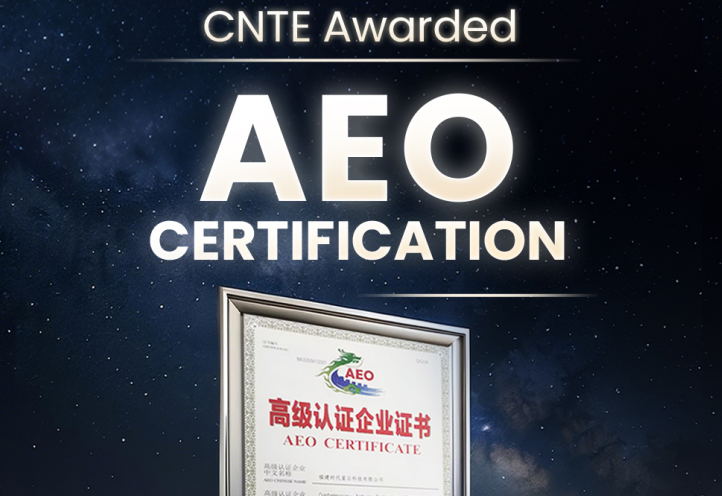
CNTE awarded AEO certification
Mar 14, 2025
Tags
- 1 mw battery storage
- 500 kw battery
- 500 kw battery storage
- 500 kwh battery price
- 500 kwh battery storage
- 50kw solar battery storage
- advanced battery manufacturing
- advanced energy storage systems
- advances in batteries for medium and large scale energy storage
- all in one solar battery
- at home battery
- battery based energy storage
- battery capacity for solar system
- battery electric storage system
- battery energy storage system price
- battery house solar
- battery installation for solar
- battery pack for home solar system
- battery pack for solar system
- battery pack house
- battery pack kwh
- battery power storage systems
- battery storage applications
- battery storage device
- battery storage kwh
- battery storage price per kwh
- battery storage solutions solar
- battery storage suppliers
- battery storage system design
- battery that can power a house
- battery to grid
- bess battery energy
- bess solar system
- better battery renewable energy
- big battery storage
- buy battery storage
- buy solar battery storage
- charging station
- chinese solar batteries
- clean energy storage solutions
- commercial solar power battery storage
- cost of battery storage for solar panels
- cost of solar and battery system
- cost of solar power battery storage
- electric battery storage system
- electrical energy storage exhibition
- energy battery pack
- energy generation and storage
- energy storage battery pack
- energy storage system lithium battery
- energy storage system malaysia
- energy storage system price
- energy storage system solar
- energy tech battery
- ess battery price
- ess battery system
- ess solar battery
- ess solar system
- ev battery for solar storage
- ev battery solar storage
- green energy lithium battery
- high capacity battery for solar panels
- hybrid battery storage
- its technology solar
- kwh battery storage
- large batteries for solar storage
- large battery for solar energy storage
- large battery storage container
- large battery storage systems
- large solar battery storage
- large solar battery storage systems
- large solar storage batteries
- largest commercial battery
- largest solar battery storage
- latest solar batteries
- lithium batteries for off grid solar system
- lithium batteries from china
- lithium battery for off grid solar
- lithium battery for solar system price
- lithium battery home storage
- lithium battery packs for solar panels
- megawatt battery storage
- new battery storage
- off grid solar battery storage
- on grid battery
- on grid battery storage
- optical storage integration
- outdoor energy storage
- outdoor solar battery cabinet
- pcs battery system
- photovoltaic energy storage system
- plug and play energy storage
- power energy storage
- power pack energy
- power storage cells
- price per kwh battery storage
- pv solar panels and battery storage
- q cell battery storage
- smart battery storage
- solar & battery system
- solar and lithium batteries
- solar batteries inside house
- solar battery battery
- solar battery container
- solar battery kwh
- solar battery manufacturers in china
- solar battery module
- solar battery storage cabinet
- solar battery storage capacity
- solar battery storage container
- solar battery storage manufacturers
- solar battery to power house
- solar cell storage
- solar energy battery storage capacity
- solar energy battery storage system
- solar energy lithium battery
- solar energy storage and applications
- solar energy storage battery price
- solar energy storage system price
- solar energy storage technology
- solar ess system
- solar grid battery
- solar grid battery system
- solar house battery price
- solar installation battery
- solar installation with battery
- solar one batteries
- solar panel battery storage capacity
- solar panel battery storage price
- solar panel energy storage battery
- Solar panel energy storage systems
- solar panel lithium battery storage
- solar panel power storage system
- solar panels with battery storage price
- solar plant battery
- Solar Power Plant Battery
- solar pv and battery storage systems
- solar pv system with battery storage
- solar storage solutions
- solar system and battery storage
- solar with battery system
- solar with lithium battery storage
- standalone energy storage systems
- storage energy battery
- storedge battery
