
Advanced Battery Manufacturing: Electrode Engineering, Dry Coating, and Smart Factory Integration
The transition from laboratory-scale cell assembly to terawatt-hour production requires advanced battery manufacturing techniques that minimise defects, reduce solvent usage, and maximise electrode density. For B2B buyers—including energy storage system integrators, automotive OEMs, and industrial equipment manufacturers—understanding the technical differentiators in cell production directly impacts battery cycle life, safety, and cost per kilowatt-hour. This article examines the key unit operations of modern lithium-ion battery production: slurry mixing, coating, calandering, drying, electrode notching, stacking/winding, electrolyte filling, formation, and ageing. We also explore emerging methods such as dry electrode coating and laser structuring, and how CNTE (Contemporary Nebula Technology Energy Co., Ltd.) applies these principles in its own production lines to deliver consistent, high-performance storage systems.

Why Advanced Battery Manufacturing Determines Cell Performance and Lifetime
Even the best electrode chemistry will underperform if manufacturing introduces pinholes, delamination, or uneven porosity. Advanced battery manufacturing focuses on controlling six critical parameters: electrode loading uniformity (±1.5% or better), coating thickness profile, calander density, moisture content (<50 ppm for cathode, <20 ppm for anode), electrolyte wetting consistency, and solid electrolyte interphase (SEI) formation quality. Variations in these parameters cause capacity fade, increased internal resistance, and lithium plating. Gigafactories today deploy inline metrology (X-ray, laser, optical) and closed-loop feedback to maintain process capability indices (Cpk) above 1.33. CNTE implements real-time statistical process control across its electrode lines, achieving defect rates below 10 ppm for its LFP and NMC cells.
Core Unit Operations in Advanced Battery Manufacturing
Electrode Production: Slurry, Coating, and Drying
The anode and cathode slurries consist of active material, conductive carbon, binder (PVDF or SBR/CMC), and solvent (NMP for cathode, water for anode). Advanced battery manufacturing requires high-shear planetary mixers to achieve homogeneous dispersion without agglomerates. Key specifications:
- Solid content: 65–75% for NMP-based cathodes; 45–55% for water-based anodes.
- Viscosity: 2,000–10,000 cP (Brookfield) adjusted for slot-die coating.
- Filtration: 100–150 μm mesh to remove un-dispersed particles.
Slot-die coating applies slurry onto aluminium (cathode) or copper (anode) foil. Coating weight is measured by beta gauge or laser triangulation. Drying ovens (multi-zone, air impingement) remove solvent; temperature profile must avoid binder migration. Modern advanced battery manufacturing lines use vacuum-assisted drying to reduce energy consumption by 30%.
Calandering and Electrode Structuring
Calandering compresses the dried electrode to increase volumetric energy density. Roll pressure (linear load 30–150 N/mm) and gap control determine porosity (typically 25–35%). Over-compaction reduces electrolyte wettability and rate capability. Laser structuring (ablation) creates micro-channels in thick electrodes (>200 μm) to improve lithium-ion transport without sacrificing density. This technique, adopted by leading producers, increases charge rate capability by 40%.
Separator and Cell Assembly
Polyolefin separators (polyethylene or polypropylene) with ceramic coating on one or both sides improve thermal stability (shutdown temperature ~130°C). Assembly methods:
- Z-fold stacking: Preferred for prismatic and pouch cells; lower internal resistance but slower throughput (10–20 ppm).
- Jelly-roll winding: Cylindrical cells (e.g., 21700, 4680); higher speed (200+ ppm) but less electrode utilisation at the mandrel.
Dry rooms with dew point below -40°C are mandatory during assembly to prevent moisture absorption. Automated vision systems inspect for edge burrs, misalignment, and foreign particles.
Electrolyte Filling, Formation, and Ageing
Electrolyte (LiPF6 in organic carbonates) is vacuum-filled into the cell after case sealing. The process includes a wetting step lasting 6–48 hours depending on cell format. Formation—the first charge/discharge cycle—creates the SEI layer on the anode. Formation requires precise current control (typically C/20 to C/10) and temperature (40–60°C). Gas evolution (ethylene, CO₂) is vented. After formation, cells undergo degassing, second sealing, and ageing (7–14 days at 45°C) to measure self-discharge rate. Advanced battery manufacturing lines now integrate formation with DCIR (direct current internal resistance) grading, sorting cells into ±1% capacity bins.
Emerging Technologies Reshaping Advanced Battery Manufacturing
Dry Electrode Coating (Solvent-Free)
Conventional wet coating uses large ovens and recovers NMP solvent (energy-intensive). Dry coating mixes PTFE binder with active material, then calenders the powder directly onto foil. Benefits: 50% lower capital expenditure, 40% reduced factory footprint, and elimination of toxic solvents. Tesla’s Maxwell technology is the best-known example, but several equipment suppliers (e.g., Wuxi Lead, Manz) now offer production-scale dry coating lines. The main challenge remains binder fibrillation consistency and coating uniformity on high-speed lines (>50 m/min).
Laser Ablation and Notching
Traditional mechanical die cutting creates burrs and stresses the foil edge. Pulsed laser notching (nanosecond or picosecond) produces clean edges with heat-affected zones <10 μm, reducing short-circuit risks. Laser ablation also removes coating in tab areas without damaging the foil, enabling multi-tab designs that lower cell resistance.
Artificial Intelligence for Process Control
Machine learning models predict final cell capacity from in-line sensor data (coating weight, calander thickness, moisture). A neural network can reduce formation time by 20% by dynamically adjusting current based on voltage slope. Advanced battery manufacturing facilities now deploy digital twins to simulate material flow and identify bottlenecks before commissioning.
Quality Metrics and Defect Reduction
Automotive-grade cells require near-zero defects. Key quality metrics in advanced battery manufacturing:
- Particle contamination: No metallic particles >100 μm; inline eddy current detection.
- Electrode alignment: Overhang (anode beyond cathode) must be 0.5–1.5 mm on all sides.
- Weld integrity: Pull force >50 N for tab-to-busbar welds; ultrasonic or laser weld monitoring.
- Leak test: Helium mass spectrometry leak rate <1×10⁻⁶ mbar·L/s.
Statistical process control charts (X-bar and R) are maintained for each parameter. Cells failing end-of-line tests (capacity <90% nominal, DCIR >25% above mean, voltage drop >0.5 mV/day) are rejected. Top-tier manufacturers achieve first-pass yield above 96% for cylindrical cells and 92% for prismatic/pouch.
Energy Efficiency and Sustainability in Manufacturing
Producing 1 kWh of lithium-ion cell emits approximately 60–100 kg CO₂, mostly from electrode drying (30%) and formation (20%). Advanced battery manufacturing reduces this through:
- Heat recovery from oven exhaust to preheat incoming air.
- Electrochemical formation using regenerative power supplies (energy fed back to grid).
- Dry room air recirculation with desiccant wheel regeneration powered by waste heat.
CNTE operates ISO 50001-certified facilities that have reduced manufacturing energy intensity by 25% over three years.

Cost Drivers and Scaling Strategies
Raw materials (cathode active material, anode material, electrolyte, separator, copper foil) account for 60–70% of cell cost. Advanced battery manufacturing lowers conversion cost (labour, equipment depreciation, utilities) by:
- Increasing electrode coating width (from 600 mm to 1,200 mm) and line speed (from 30 m/min to 80 m/min).
- Adopting continuous electrode calendering instead of batch.
- Using high-speed stacking (0.5 seconds per sheet) from manufacturers like Koem or Mplus.
- Automating material handling with AGVs and robotic palletising.
For a 10 GWh/year gigafactory, the conversion cost target is below $25/kWh. LFP cells from such lines achieve total cost below $65/kWh, while NMC cells are around $75/kWh.
Frequently Asked Questions (FAQ) About Advanced Battery Manufacturing
Q1: What is the difference between wet coating and dry coating in battery electrode production?
A1: Wet coating mixes active material with solvent (NMP or water) and binder, then applies slurry onto foil via slot-die, followed by long drying ovens to evaporate solvent. Dry coating blends dry powder with fibrillised PTFE binder, then calenders the mixture directly onto foil without solvent. Dry coating reduces energy consumption by 40–50% and eliminates solvent recovery, but requires precise control of binder fibre network. Both methods are used in advanced battery manufacturing; dry coating is gaining adoption for next-generation factories.
Q2: How does formation affect battery cycle life?
A2: Formation is the first charge where the solid electrolyte interphase (SEI) forms on the anode. A stable, thin, and uniform SEI is critical for long cycle life. Formation current, temperature, and voltage limits must be tightly controlled. Too fast formation creates porous SEI that continuously consumes electrolyte; too slow increases manufacturing cost. Advanced battery manufacturing uses formation protocols tailored to each cell chemistry, typically C/10 for 6–12 hours, followed by C/5 cycles to complete SEI formation.
Q3: What are the main causes of internal short circuits in new cells?
A3: The primary causes are metallic particle contamination (iron, nickel, copper) that penetrates the separator, electrode edge burrs from poor notching, and separator wrinkles or pinholes. Advanced battery manufacturing mitigates these through magnetic separation of slurries, high-resolution vision inspection after notching, and separator ceramic coating to improve puncture resistance. Hi-Pot testing (500–1000 V) at the end of line identifies cells with latent shorts.
Q4: Can existing lines be upgraded to produce 4680 or large-format cells?
A4: Partially. The 4680 format (46 mm diameter, 80 mm height) requires different winding mandrels, case fabrication (e.g., deep-drawn cans), and laser welding for the tabless design. Electrode coating width must increase to accommodate longer jelly-rolls. However, many wet coating and calendering modules are adaptable. Retrofitting is capital-intensive; many manufacturers build dedicated lines for large-format cells. CNTE has designed modular production platforms that support multiple cell formats with minimal changeover time.
Q5: How do manufacturers ensure moisture control during assembly?
A5: Electrodes and separators are hydroscopic. Moisture reacts with LiPF₆ to form HF, which corrodes cell components and causes gas generation. Assembly occurs in dry rooms with dew point ≤ -40°C (equivalent to <100 ppm water). Operators wear full-body suits; materials enter via airlocks with dehumidification. After electrolyte filling, cells are immediately sealed. Inline moisture sensors (coulometric Karl Fischer) test electrode reels and cell internals. For advanced battery manufacturing, dry room air handling accounts for 10–15% of facility energy use.
Investing in Process Excellence for Reliable Energy Storage
The shift to terawatt-hour production demands advanced battery manufacturing that integrates precision coating, laser structuring, AI-driven process control, and dry electrode methods. For B2B buyers, selecting a cell or system supplier requires auditing their manufacturing capabilities: inline metrology, formation protocols, and defect traceability. CNTE maintains fully digitised production lines with batch-level genealogy, enabling full lifecycle transparency.
Ready to discuss how CNTE’s manufacturing processes translate into safer, longer-lasting energy storage systems for your commercial or industrial project? Submit an inquiry to receive detailed technical datasheets, audit reports, and sample testing results.
Get in Touch
Recent Posts
-

CNTE at KEY ENERGY 2026: Showcases STAR H-PLUS Outdoor Liquid-Cooled Energy Storage System
Mar 05, 2026 -

CNTE Honored as 2025 Forbes China Leading Global Brand
Nov 12, 2025 -

CNTE & YOU.ON Partner to Expand Storage Markets
May 19, 2025 -

CNTE Unveils Energy Storage Lineup at Solartech 2025
May 19, 2025 -
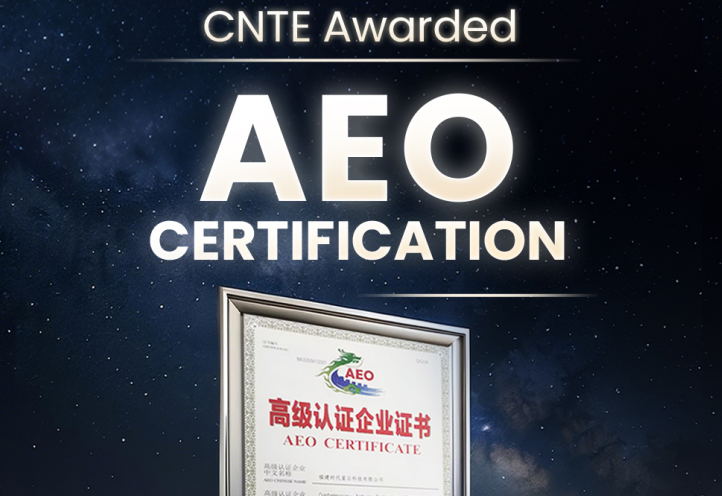
CNTE awarded AEO certification
Mar 14, 2025
Tags
- 1 mw battery storage
- 500 kw battery
- 500 kw battery storage
- 500 kwh battery price
- 500 kwh battery storage
- 50kw solar battery storage
- advanced battery manufacturing
- advanced energy storage systems
- advances in batteries for medium and large scale energy storage
- all in one solar battery
- at home battery
- battery based energy storage
- battery capacity for solar system
- battery electric storage system
- battery energy storage system price
- battery house solar
- battery installation for solar
- battery pack for home solar system
- battery pack for solar system
- battery pack house
- battery pack kwh
- battery power storage systems
- battery storage applications
- battery storage device
- battery storage kwh
- battery storage price per kwh
- battery storage solutions solar
- battery storage suppliers
- battery storage system design
- battery that can power a house
- battery to grid
- bess battery energy
- bess solar system
- better battery renewable energy
- big battery storage
- buy battery storage
- buy solar battery storage
- charging station
- chinese solar batteries
- clean energy storage solutions
- commercial solar power battery storage
- cost of battery storage for solar panels
- cost of solar and battery system
- cost of solar power battery storage
- electric battery storage system
- electrical energy storage exhibition
- energy battery pack
- energy generation and storage
- energy storage battery pack
- energy storage system lithium battery
- energy storage system malaysia
- energy storage system price
- energy storage system solar
- energy tech battery
- ess battery price
- ess battery system
- ess solar battery
- ess solar system
- ev battery for solar storage
- ev battery solar storage
- green energy lithium battery
- high capacity battery for solar panels
- hybrid battery storage
- its technology solar
- kwh battery storage
- large batteries for solar storage
- large battery for solar energy storage
- large battery storage container
- large battery storage systems
- large solar battery storage
- large solar battery storage systems
- large solar storage batteries
- largest commercial battery
- largest solar battery storage
- latest solar batteries
- lithium batteries for off grid solar system
- lithium batteries from china
- lithium battery for off grid solar
- lithium battery for solar system price
- lithium battery home storage
- lithium battery packs for solar panels
- megawatt battery storage
- new battery storage
- off grid solar battery storage
- on grid battery
- on grid battery storage
- optical storage integration
- outdoor energy storage
- outdoor solar battery cabinet
- pcs battery system
- photovoltaic energy storage system
- plug and play energy storage
- power energy storage
- power pack energy
- power storage cells
- price per kwh battery storage
- pv solar panels and battery storage
- q cell battery storage
- smart battery storage
- solar & battery system
- solar and lithium batteries
- solar batteries inside house
- solar battery battery
- solar battery container
- solar battery kwh
- solar battery manufacturers in china
- solar battery module
- solar battery storage cabinet
- solar battery storage capacity
- solar battery storage container
- solar battery storage manufacturers
- solar battery to power house
- solar cell storage
- solar energy battery storage capacity
- solar energy battery storage system
- solar energy lithium battery
- solar energy storage and applications
- solar energy storage battery price
- solar energy storage system price
- solar energy storage technology
- solar ess system
- solar grid battery
- solar grid battery system
- solar house battery price
- solar installation battery
- solar installation with battery
- solar one batteries
- solar panel battery storage capacity
- solar panel battery storage price
- solar panel energy storage battery
- Solar panel energy storage systems
- solar panel lithium battery storage
- solar panel power storage system
- solar panels with battery storage price
- solar plant battery
- Solar Power Plant Battery
- solar pv and battery storage systems
- solar pv system with battery storage
- solar storage solutions
- solar system and battery storage
- solar with battery system
- solar with lithium battery storage
- standalone energy storage systems
- storage energy battery
- storedge battery
