
Solar Energy Storage and Applications: Sizing, ROI & System Integration for C&I Projects
For B2B energy managers, facility owners, and EPC contractors, solar energy storage and applications represent a shift from simple photovoltaic generation to dispatchable, resilient power. Pairing lithium-ion battery storage with solar PV transforms an intermittent resource into a controllable asset that provides peak shaving, backup power, and time-of-use arbitrage. This article examines the engineering principles, component selection criteria, control strategies, and financial models for integrating storage with solar across industrial parks, commercial buildings, and remote facilities. Drawing from field data, we also explore how CNTE (Contemporary Nebula Technology Energy Co., Ltd.) designs scalable storage solutions tailored to real-world load profiles and grid conditions.
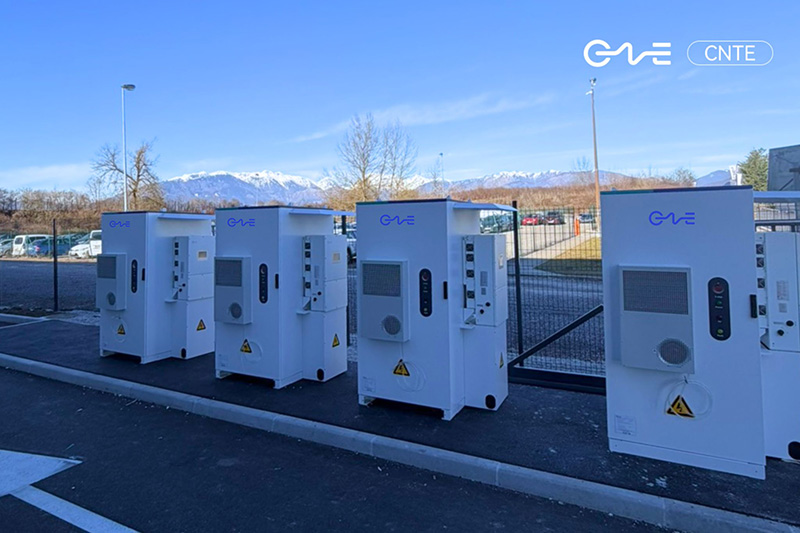
Table of contents cntepower 1 Why Solar Energy Storage and Applications Matter for C&I Facilities 2 Core Components for Solar Energy Storage and Applications 2.1 Battery Technology Selection 2.2 Inverter and Charge Controller Integration 3 Engineering Sizing Methodology for Solar+Storage 4 Control Strategies for Solar Energy Storage Systems 5 Financial Modelling and ROI for Solar+Storage 6 Application Scenarios: Industrial Parks, Retail, and Remote Sites 6.1 Industrial Manufacturing Plant 6.2 Cold Storage Warehouse 6.3 Remote Community Microgrid 7 Technical Standards and Safety Compliance 8 Frequently Asked Questions (FAQ) About Solar Energy Storage and Applications 9 Engineering a Profitable Solar+Storage Asset
Why Solar Energy Storage and Applications Matter for C&I Facilities
Commercial and industrial electricity consumers face three converging pressures: rising demand charges, time-of-use rates that penalise afternoon consumption, and reliability concerns from aging grid infrastructure. Standalone solar PV cannot address these alone—production peaks at midday, while facility demand often peaks in late afternoon. A properly sized battery bridges this gap. The core value of solar energy storage and applications lies in three functions:
Self-consumption maximisation: Store excess solar generation and discharge during evening or high-tariff periods, reducing grid purchases by 60–85%.
Demand charge management: Discharge battery during the 15- or 30-minute interval when facility load exceeds a preset threshold, cutting monthly demand charges by 30–50%.
Islanding and backup: Provide seamless transition to battery power during grid faults, supporting critical loads for 2–8 hours depending on battery capacity.
When these functions are combined, a solar+storage system achieves payback periods between 4 and 7 years for most C&I tariffs. CNTE provides pre-engineered DC-coupled and AC-coupled solutions that integrate with new or existing solar arrays, minimising retrofit complexity.
Core Components for Solar Energy Storage and Applications
Battery Technology Selection
For daily cycling applications (1–2 cycles per day), lithium iron phosphate (LFP) chemistry is preferred over NMC due to longer cycle life (6,000–8,000 cycles at 80% depth of discharge), better thermal stability, and lower lifetime cost per kWh. Key specifications:
Usable energy capacity: Typically 90% of nominal capacity to preserve cycle life.
Rated power (C-rate): 0.5C to 1C for most C&I systems. A 500 kWh battery with 0.5C provides 250 kW continuous power, suitable for peak shaving.
Round-trip efficiency: 88–92% for LFP-based systems with liquid cooling.
Inverter and Charge Controller Integration
Two topologies dominate solar energy storage and applications:
DC-coupled: Solar charge controller directly charges battery; one bi-directional inverter connects to grid/loads. Higher efficiency (97% DC-DC) and lower cost for new installations.
AC-coupled: Existing grid-tied PV inverter plus a separate battery inverter at the AC bus. Better for retrofits but slightly lower round-trip efficiency (92–94%).
Hybrid inverters (multi-mode) combine both functions, supporting grid-tied, off-grid, and backup modes. Advanced models include generator input and black-start capability.
Engineering Sizing Methodology for Solar+Storage
Correctly sizing a system for solar energy storage and applications requires sequential analysis:
Load profiling: Collect 12 months of 15-minute interval data. Identify peak demand (kW), daily energy consumption (kWh), and load factor.
Solar generation modelling: Using PVWatts or similar tools, simulate hourly production for the proposed array size. Overproduction hours indicate potential battery charging windows.
Battery power sizing: Power (kW) should cover either (a) the peak demand interval target reduction, or (b) the largest critical load step for backup. Rule of thumb: battery inverter rating = 80–120% of PV inverter rating for DC-coupled systems.
Battery energy sizing: For daily self-consumption, energy (kWh) = average daily solar surplus × 1.2 (buffer). For peak shaving, energy = (peak demand target reduction in kW) × (duration of peak interval in hours) × 0.9. For backup, energy = critical load (kW) × required autonomy (hours) × 1.1.
Most C&I projects settle on 2–4 hours of storage duration (0.5C to 0.25C). Oversizing beyond 6 hours rarely improves ROI unless deep backup or off-grid operation is required.
Control Strategies for Solar Energy Storage Systems
The energy management system (EMS) executes real-time optimisation. Typical control modes include:
Time-of-use (TOU) arbitrage: Charge battery during lowest tariff periods (e.g., midnight–6 AM) and discharge during peak periods (4–9 PM). The EMS uses forecasted load and solar production.
Peak shaving with demand threshold: The EMS monitors import power at the point of common coupling. When import exceeds a preset threshold (e.g., 80% of peak demand from prior month), the battery discharges to keep import below that threshold.
Solar self-consumption priority: The battery charges only from excess solar (no grid charging), discharging when solar production drops below load. This maximises renewable fraction.
Backup reserve: The EMS reserves a configurable SOC (e.g., 20–30%) for grid outages. When a utility fault is detected, the system islands within
<20 ms.="">
Advanced controllers from CNTE include machine learning that adapts to seasonal load changes and tariff updates, reducing manual tuning.
Financial Modelling and ROI for Solar+Storage
A bankable business case for solar energy storage and applications combines hard savings and avoided costs. Typical revenue streams for a 1 MWp solar + 2 MWh battery system:
Electricity bill reduction: Avoided grid purchases at retail rate ($0.12–0.28/kWh). For a facility consuming 4,000 MWh/year, solar+storage can displace 60% of grid energy: savings $288,000–$672,000 annually.
Demand charge savings: Average demand charge in commercial tariffs is $12–18/kW. Reducing peak by 300 kW saves $43,200–$64,800/year.
Incentives: US Investment Tax Credit (30% for solar+storage if charged ≥75% from solar), state rebates, and accelerated depreciation (MACRS 5-year).
Demand response revenue: Utility programs pay $50–150/kW-year for dispatchable capacity.
Total installed cost for a 1 MW / 2 MWh AC-coupled solar+storage system ranges from $1.8M to $2.5M. After incentives, net CAPEX $1.2M–$1.7M. With annual savings of $350,000–$500,000, simple payback is 3–5 years, and the 10-year lifecycle IRR exceeds 15%.
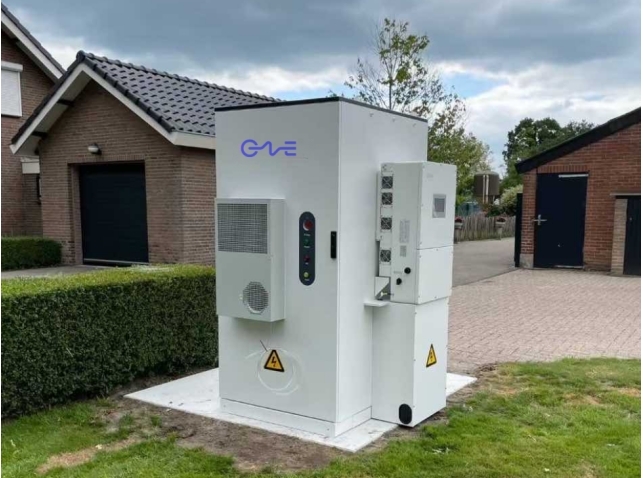
Application Scenarios: Industrial Parks, Retail, and Remote Sites
Industrial Manufacturing Plant
A metal processing facility with 1.5 MW peak demand and 24/7 operation installed a 1 MW PV array + 2.5 MWh LFP battery. The system performs peak shaving (reducing demand from 1.5 MW to 1.1 MW) and night-time solar shifting (daytime excess stored for night shift). Annual savings: $420,000. Payback: 4.2 years.
Cold Storage Warehouse
Refrigeration loads are sensitive to voltage sags. A 500 kW / 1 MWh battery provides both peak shaving and ride-through capability for sags up to 10 seconds, protecting compressors from trips. The system also earns capacity payments from the local utility’s fast frequency response program.
Remote Community Microgrid
For a mining camp previously reliant on diesel generators, a 2 MWp solar + 4 MWh battery + existing genset hybrid reduces diesel consumption by 75%. The solar energy storage and applications controller manages generator starts only when battery SOC falls below 25%, saving 400,000 litres of diesel annually.
Technical Standards and Safety Compliance
All commercial solar+storage systems must comply with:
UL 9540 (Energy Storage Systems and Equipment) – fire safety and electrical protection.
UL 9540A – thermal runaway fire propagation testing.
IEEE 1547-2018 – grid interconnection and anti-islanding.
NFPA 855 – installation spacing, ventilation, and suppression requirements.
Battery enclosures require IP54 or higher for outdoor installations. Liquid cooling systems must have leak detection and automatic shutdown. CNTE delivers fully UL9540-listed cabinet systems with integrated fire suppression, reducing site engineering and permitting time.
Frequently Asked Questions (FAQ) About Solar Energy Storage and Applications
Q1: Can I add battery storage to an existing solar PV system that is already grid-tied?
A1: Yes. The most common retrofit is AC-coupled storage: a new battery inverter connects to the AC bus between the existing PV inverter and the utility meter. The battery charges from excess solar or from the grid during low-rate periods. No changes to the existing PV system are required. Solar energy storage and applications retrofits typically take 2–3 weeks for a 500 kW system.
Q2: What happens during a grid outage if my solar+storage system is grid-tied?
A2: Standard grid-tied inverters shut down for safety. To provide backup, you need a storage system with islanding capability and a transfer switch. During an outage, the battery inverter disconnects from the grid, forms its own microgrid, and powers dedicated backup loads. Solar PV can recharge the battery if a frequency or voltage reference is provided by the battery inverter. This configuration is called “grid-interactive with backup.”
Q3: How many years will the battery last with daily solar cycling?
A3: Quality LFP batteries used in solar energy storage and applications are rated for 6,000–8,000 cycles at 80% depth of discharge. With one full cycle per day (daytime charging, evening discharging), this equals 16–22 years of useful life. However, most C&I systems cycle less than once per day (e.g., 300 cycles/year), extending calendar life to 15–20 years. The battery warranty typically covers 10 years or 70% end-of-life state-of-health.
Q4: What is the difference between DC-coupled and AC-coupled storage for solar?
A4: DC-coupled: solar panels connect to a charge controller that directly charges the battery; one inverter converts battery DC to AC for loads/grid. Higher efficiency (97% for DC-DC) and lower hardware cost. Best for new installations. AC-coupled: solar has its own grid-tied inverter; a separate battery inverter connects at the AC side. Slightly lower round-trip efficiency (92–94%) but allows retrofitting to any existing PV system. Both configurations support solar energy storage and applications equally; choice depends on project type.
Q5: Do I need to replace my existing generator if I add solar+storage?
A5: No. Solar+storage works alongside existing generators. In a hybrid configuration, the battery handles short-duration fluctuations and daily cycling, while the generator provides long-duration backup (e.g., multi-day outages). The controller starts the generator only when battery SOC falls below a threshold. This reduces generator runtime by 70–90%, extending its life and lowering fuel costs. No generator replacement is required.
Engineering a Profitable Solar+Storage Asset
Successful deployment of solar energy storage and applications demands rigorous load analysis, correct battery and inverter sizing, and a control strategy that aligns with local tariff structures. When executed properly, commercial and industrial facilities achieve payback periods under five years, improve power quality, and gain backup resilience without replacing existing generator assets.
Ready to evaluate solar+storage for your facility? Submit an inquiry to receive a detailed feasibility study including load data analysis, system sizing, tariff optimisation, and financial projections. CNTE provides end-to-end engineering, UL-certified equipment, and remote monitoring to ensure long-term performance.
Get in Touch
Recent Posts
-
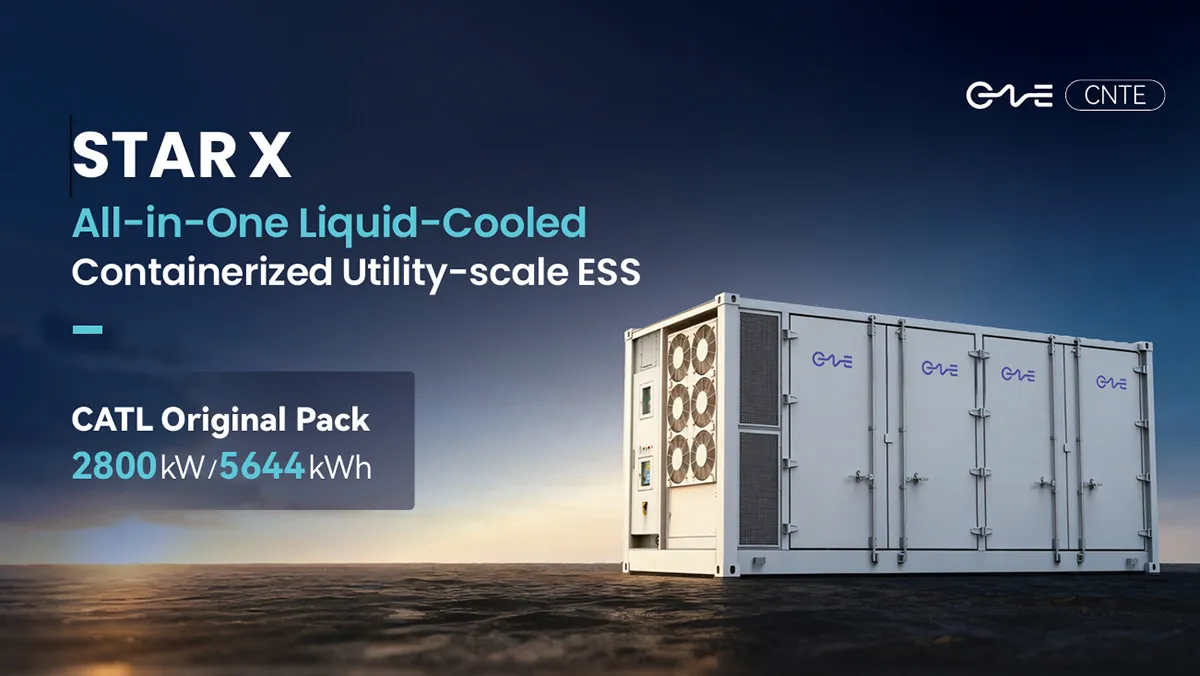
CNTE Launches STAR X Liquid-Cooled DC/AC Integrated Energy Storage System at Intersolar Europe 2026
Jul 06, 2026 -
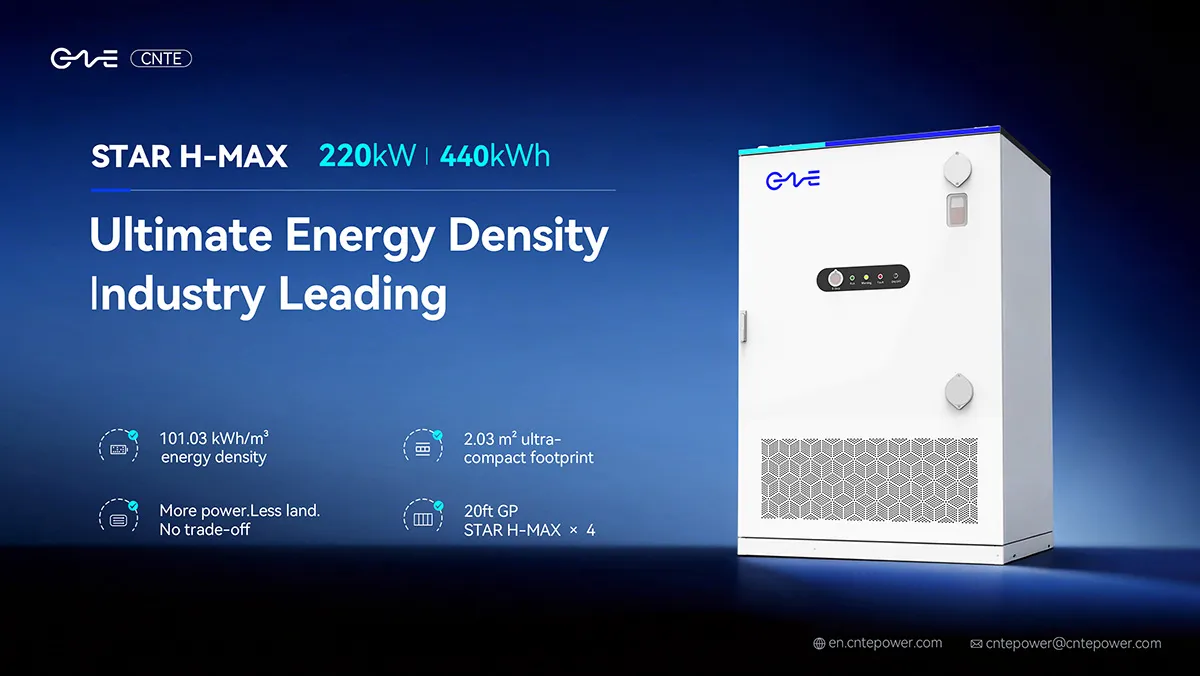
CNTE Unveils New STAR H-MAX Liquid-Cooled C&I ESS at Intersolar Europe 2026
Jun 23, 2026 -
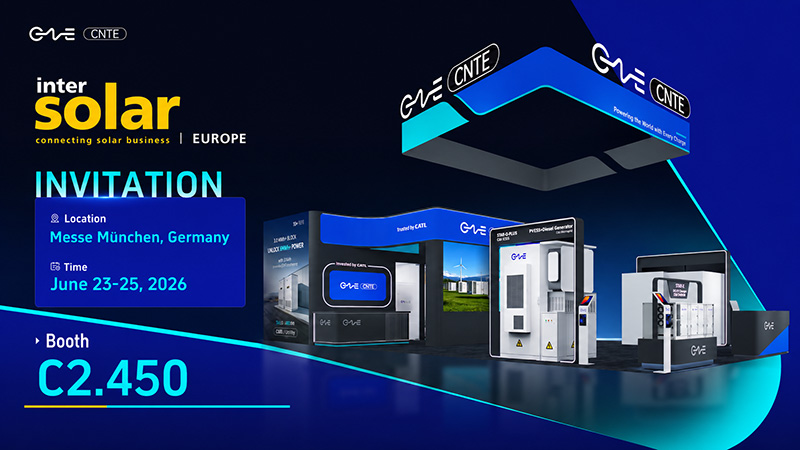
CNTE to Participate in Intersolar Europe 2026
May 20, 2026 -
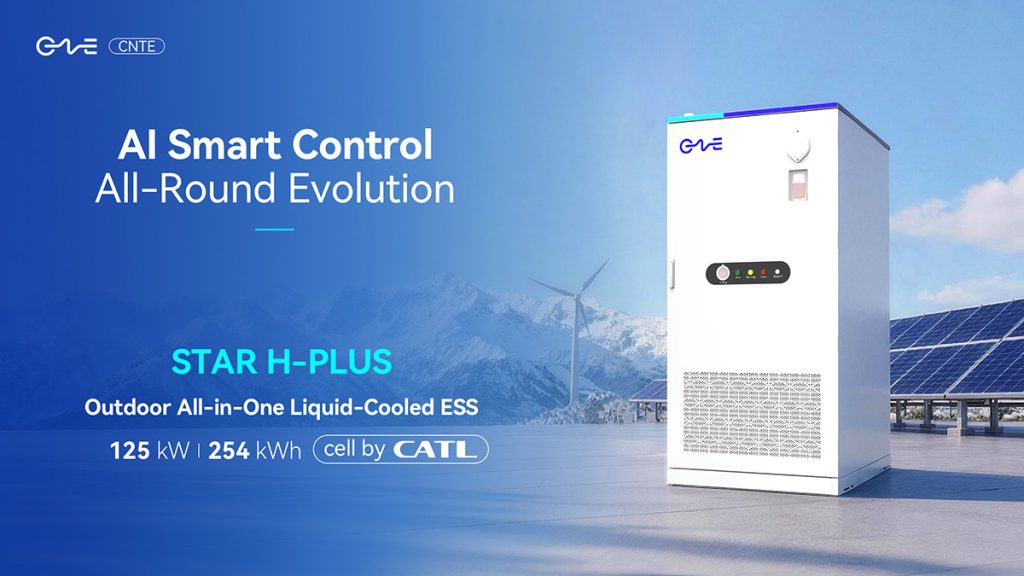
CNTE at KEY ENERGY 2026: Showcases STAR H-PLUS Outdoor Liquid-Cooled Energy Storage System
Mar 05, 2026 -

CNTE Honored as 2025 Forbes China Leading Global Brand
Jul 06, 2026 -

CNTE & YOU.ON Partner to Expand Storage Markets
May 19, 2025 -

CNTE Unveils Energy Storage Lineup at Solartech 2025
May 19, 2025 -
CNTE awarded AEO certification
Jul 06, 2026 -
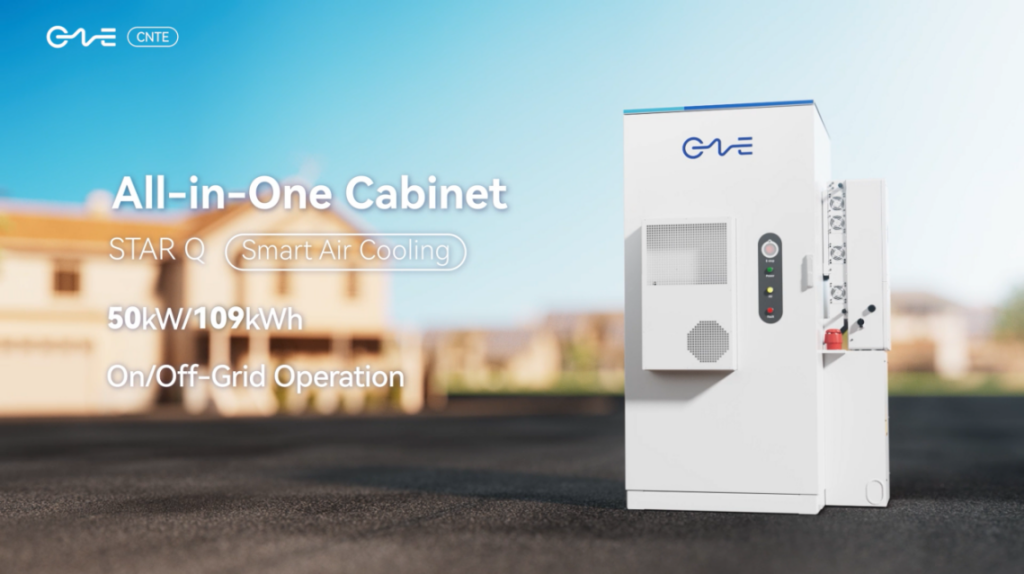
CNTE New Product Launch STAR Q
Jan 15, 2025 -

CNTE Named to Forbes China 2024 Top 30 Go-International Brands
Jul 06, 2026
