
6 Engineering Strategies for Designing Resilient Solar & Battery Systems in 2026: A B2B Technical Framework
The convergence of photovoltaic generation curves with behind-the-meter consumption profiles requires more than simply connecting modules to cells. A properly architected solar & battery system functions as a single, dispatchable power plant—balancing intermittent renewable input with time-shifted output and grid ancillary services. For engineering, procurement, and construction (EPC) firms and project developers, the focus in 2026 has shifted toward inverter loading ratios, thermal runway mitigation within enclosures, and firmware-defined operating modes that maximize revenue stacking. This analysis dissects the electrical and mechanical design considerations that underpin bankable solar & battery system projects, with particular attention to the interface between DC solar arrays and AC-coupled or DC-coupled storage blocks.
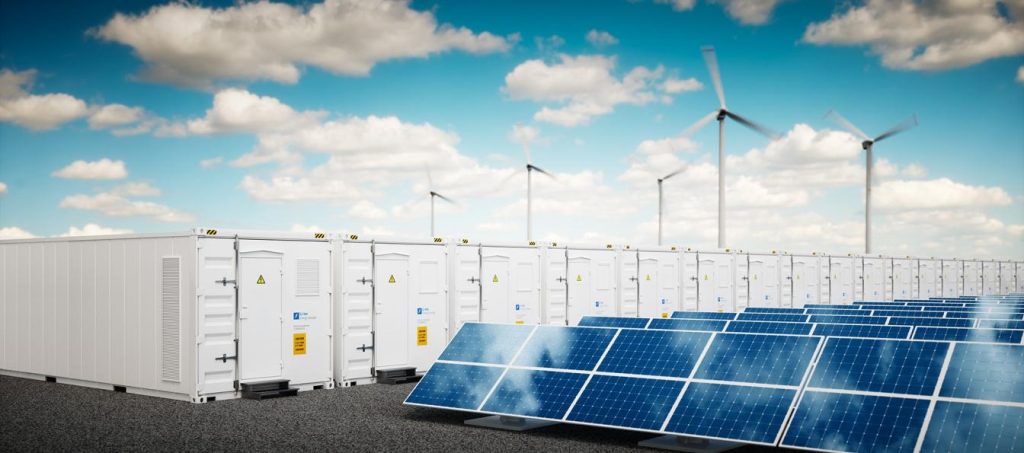
1. Coupling Topology Selection and Its Impact on Round-Trip Efficiency
The decision to deploy a DC-coupled photovoltaic energy storage system versus an AC-coupled retrofit has first-order implications for both capital expenditure and long-term performance degradation. In a DC-coupled solar & battery system, the PV array connects to the battery’s DC bus via a DC/DC converter, allowing direct charging of the lithium iron phosphate battery bank without incurring multiple inversion losses. This configuration routinely achieves round-trip efficiencies (RTE) in the range of 94% to 96% when measured from PV input to AC grid output during discharge.
- DC-Coupled Advantages: Reduced balance-of-system hardware, superior clipping recapture for oversized PV arrays, and lower standby consumption during overnight hours.
- AC-Coupled Advantages: Simpler retrofitting into existing utility-scale solar farm infrastructure, independent MPPT tracking optimization, and wider vendor interoperability.
- Hybrid inverter integration: Next-generation multi-port inverters consolidate PV MPPT channels and bidirectional battery converters on a single heat sink, minimizing power electronics footprint by up to 30%.
For greenfield installations exceeding 5 MW AC, engineering teams should evaluate the marginal cost of additional DC/DC converters against the lifetime value of efficiency gains. A 1.5% delta in RTE over a 20-year operational life translates to significant MWh throughput variance—a parameter scrutinized by independent engineers during financing due diligence.
2. Battery Capacity Optimization Beyond the Rule of Thumb
Oversizing a solar & battery system leads to stranded capital; undersizing results in premature cycle aging and failure to meet contractual performance guarantees. The industry has moved past simple kWh-to-kWp ratios toward software-defined simulation that incorporates 8760-hour load profiles and time-of-use tariff structures. Effective sizing of containerized energy storage must account for three distinct operational regimes:
- Peak shaving discharge depth: Maintaining a state-of-charge (SoC) buffer between 20% and 90% to mitigate accelerated calendar fade associated with high-voltage storage.
- Frequency regulation throughput: Cells must withstand high C-rate micro-cycles without excessive internal temperature rise. This demands cell designs with low DC internal resistance (≤0.25 mΩ for 280Ah prismatic cells).
- Backup power autonomy: For islandable off-grid solar battery solutions, sizing must account for multiple consecutive days of low irradiance based on TMY (Typical Meteorological Year) data for the specific coordinates.
3. Thermal Regulation and Fire Risk Mitigation in Enclosed Systems
Heat is the primary accelerator of electrolyte decomposition and solid-electrolyte interphase (SEI) growth in a solar & battery system. While LFP chemistry provides inherent thermal stability up to approximately 270°C (onset of exothermic reactions), poorly managed thermal gradients within a battery rack can reduce cycle life by 30% or more. Advanced commercial battery storage systems now employ liquid cooling plates with glycol-water mixtures to maintain cell-to-cell temperature differentials below 3°C.
From a safety compliance standpoint, the enclosure design for a solar & battery system must meet the propagation resistance criteria of UL 9540A. This involves demonstrating that a single-cell thermal runaway event will not cascade to adjacent modules. Key design interventions include:
- Aerosol fire suppression agents (FK-5-1-12) deployed within sealed compartments.
- Ceramic fiber insulation barriers between rack levels.
- Active venting with hydrogen off-gas detection sensors (especially relevant for early-stage cell formation gases).
4. Grid Support Functions and Interconnection Study Compliance
A modern solar & battery system is required to behave as a cooperative grid asset rather than a passive load/generator. This necessitates inverter firmware capable of executing volt-var curves (IEEE 1547-2018 Category B), frequency-watt droop response, and low-voltage ride-through (LVRT) without momentary cessation. In regions with high distributed energy resource (DER) penetration, the ability to provide synthetic inertia through fast frequency response (FFR) can unlock additional revenue streams or streamline interconnection approval.
Contemporary Nebula Technology Energy Co., Ltd. (CNTE) engineers its utility-scale BESS containers with grid-forming capabilities as a standard software option. This allows the solar & battery system to establish a stable voltage reference for microgrids during islanded operation, eliminating the need for a dedicated synchronous condenser in remote mining or community electrification projects.
5. The Role of Predictive Algorithms in Maximizing Asset Value
Hardware is the body; the Energy Management System (EMS) is the brain of any integrated solar & battery system. While basic EMS platforms execute pre-programmed time-of-use schedules, advanced iterations utilize machine learning to forecast both PV generation (via satellite-derived cloud vectoring) and facility load (via pattern recognition of HVAC or industrial motor startup). This predictive layer allows the C&I energy storage system to pre-charge before an anticipated demand spike, thereby shaving peak kW charges more aggressively than a static schedule.
Integration with SCADA systems via Modbus TCP/IP or DNP3 protocols is standard. However, CNTE and other top-tier integrators now offer RESTful API access for third-party aggregators participating in wholesale market bidding. This programmatic interface allows the solar & battery system to respond to ancillary service dispatch signals within 200 milliseconds—a requirement for participation in PJM RegD or similar fast-regulation markets.
6. Commissioning Protocols and Remote Diagnostics Infrastructure
The final acceptance test (FAT) for a solar & battery system must validate more than mere capacity. A rigorous site acceptance test (SAT) includes:
- Round-trip efficiency measurement at rated power over a full charge/discharge cycle.
- Thermal imaging of all busbar connections to identify hotspots >55°C under full load.
- Simulated grid disturbance to confirm ride-through and ramp-rate control adherence.
- Communication failover testing to ensure local control remains operational during WAN outage.
Post-commissioning, the operational integrity of the solar & battery system depends on over-the-air (OTA) firmware updates and continuous state-of-health (SoH) monitoring. By leveraging cloud-based analytics that compare real-time internal resistance trends against fleet-wide baselines, asset managers can identify outlier modules before they trigger a site visit. This predictive maintenance approach reduces operational expenditure by shifting from calendar-based to condition-based servicing.

Request Technical Due Diligence and System Sizing Analysis
Selecting a partner for a multi-megawatt solar & battery system deployment involves complex trade-offs between initial CAPEX, warranty depth, and operational flexibility. Our engineering group provides complimentary single-line diagram (SLD) reviews and preliminary DC/AC ratio optimization based on your specific interconnection constraints. To discuss your project’s unique requirements or to request a formal submittal package, please initiate an inquiry through our technical support channel.
Connect with CNTE technical pre-sales → Submit Project Specifications for Evaluation
Frequently Asked Questions on Solar & Battery System Integration
Q1: What is the optimal DC/AC ratio (inverter loading ratio) for a DC-coupled solar & battery system?
A1: For DC-coupled configurations with storage, inverter loading ratios (ILR) can be increased to 1.3–1.5 without significant clipping losses, as excess PV energy is diverted to battery charging during peak irradiance hours. The precise optimal ratio depends on local irradiance profile and storage capacity duration. Simulations using Pvsyst or HOMER Pro should model the specific site’s TMY data to avoid oversizing the PV array relative to the battery’s charge acceptance rate.
Q2: How does calendar aging affect the warranty valuation of a solar & battery system?
A2: Calendar aging (time-dependent degradation independent of cycle count) is primarily driven by average state-of-charge and ambient temperature. Warranties from reputable manufacturers explicitly state a minimum retained capacity—commonly 70% after 10 years or 80% after 15 years—factoring in both cycle and calendar fade. Buyers should confirm whether the warranty covers both energy capacity and power capability (kW) degradation, as power fade can restrict revenue from frequency regulation services even if energy capacity remains high.
Q3: Can a solar & battery system operate in grid-forming mode during a blackout without a diesel generator?
A3: Yes, provided the inverter is rated for grid-forming (GFM) operation and the system includes appropriate synchronization and grounding provisions. In this mode, the solar & battery system creates a microgrid voltage reference. However, the system must be capable of handling inrush currents from motor loads (e.g., well pumps or HVAC compressors) that are typically 3–7 times the running current. Ensure the power conversion system (PCS) has a specified overload capability of at least 150% for 10 seconds to support black start of inductive loads.
Q4: What are the key differences between indoor commercial energy storage cabinets and outdoor containerized systems?
A4: Indoor cabinets typically rely on the building’s HVAC infrastructure and have stricter fire code restrictions regarding separation distance and smoke detection integration. Outdoor outdoor battery energy storage containers are self-contained with integrated cooling and fire suppression, offering faster deployment but requiring careful site preparation for foundation pad, grounding grid, and flood plain clearance. Outdoor ratings (NEMA 4/IP55) are mandatory for components exposed to precipitation and dust.
Q5: How are Chinese manufacturers addressing supply chain traceability for the EU Battery Passport?
A5: Advanced solar battery manufacturers in china have implemented digital product passports that track the carbon footprint from raw material extraction through cell manufacturing and system assembly. For the EU Battery Regulation, this includes due diligence on cobalt and lithium sourcing. CNTE provides a verified Life Cycle Assessment (LCA) report following the PEFCR methodology, which is a mandatory attachment for shipments entering the European Customs Union starting 2027.
Q6: What are the implications of using 1500V DC architecture in a solar & battery system?
A6: Moving from 1000V to 1500V DC architecture reduces the number of combiner boxes and string wiring by approximately 30-40%, lowering balance-of-system cost and installation labor. For the battery side, 1500V string voltages allow for longer DC cable runs without excessive voltage drop. However, this architecture requires strict adherence to partial discharge and creepage distance standards (IEC 62477-1), and all connectors must be rated for 1500V DC operation to prevent arcing faults during disconnection under load.
As the energy transition accelerates, the technical sophistication of the integrated solar & battery system will increasingly determine the financial viability and operational resilience of distributed generation portfolios. A methodical approach to system design, certification, and lifecycle management remains the most reliable path to achieving predictable, long-term asset performance.
Get in Touch
Recent Posts
-

CNTE at KEY ENERGY 2026: Showcases STAR H-PLUS Outdoor Liquid-Cooled Energy Storage System
Mar 05, 2026 -

CNTE Honored as 2025 Forbes China Leading Global Brand
Nov 12, 2025 -

CNTE & YOU.ON Partner to Expand Storage Markets
May 19, 2025 -

CNTE Unveils Energy Storage Lineup at Solartech 2025
May 19, 2025 -
CNTE awarded AEO certification
Mar 14, 2025
Tags
- 1 mw battery storage
- 500 kw battery
- 500 kw battery storage
- 500 kwh battery price
- 500 kwh battery storage
- 50kw solar battery storage
- all in one solar battery
- at home battery
- battery based energy storage
- battery capacity for solar system
- battery electric storage system
- battery energy storage system price
- battery house solar
- battery installation for solar
- battery pack for home solar system
- battery pack for solar system
- battery pack house
- battery pack kwh
- battery power storage systems
- battery storage applications
- battery storage device
- battery storage kwh
- battery storage price per kwh
- battery storage suppliers
- battery storage system design
- battery that can power a house
- battery to grid
- bess battery energy
- bess solar system
- better battery renewable energy
- big battery storage
- buy battery storage
- buy solar battery storage
- charging station
- chinese solar batteries
- clean energy storage solutions
- commercial solar power battery storage
- cost of battery storage for solar panels
- cost of solar and battery system
- cost of solar power battery storage
- electric battery storage system
- electrical energy storage exhibition
- energy battery pack
- energy storage battery pack
- energy storage system lithium battery
- energy storage system malaysia
- energy storage system price
- energy storage system solar
- energy tech battery
- ess battery price
- ess battery system
- ess solar battery
- ess solar system
- ev battery for solar storage
- ev battery solar storage
- green energy lithium battery
- high capacity battery for solar panels
- hybrid battery storage
- its technology solar
- kwh battery storage
- large batteries for solar storage
- large battery for solar energy storage
- large battery storage container
- large battery storage systems
- large solar battery storage
- large solar battery storage systems
- large solar storage batteries
- largest commercial battery
- largest solar battery storage
- latest solar batteries
- lithium batteries for off grid solar system
- lithium batteries from china
- lithium battery for off grid solar
- lithium battery for solar system price
- lithium battery home storage
- lithium battery packs for solar panels
- megawatt battery storage
- new battery storage
- off grid solar battery storage
- on grid battery
- on grid battery storage
- optical storage integration
- outdoor energy storage
- outdoor solar battery cabinet
- pcs battery system
- power pack energy
- power storage cells
- price per kwh battery storage
- pv solar panels and battery storage
- q cell battery storage
- smart battery storage
- solar & battery system
- solar and lithium batteries
- solar batteries inside house
- solar battery battery
- solar battery container
- solar battery kwh
- solar battery manufacturers in china
- solar battery module
- solar battery storage cabinet
- solar battery storage capacity
- solar battery storage container
- solar battery storage manufacturers
- solar battery to power house
- solar cell storage
- solar energy battery storage capacity
- solar energy battery storage system
- solar energy lithium battery
- solar energy storage battery price
- solar energy storage system price
- solar energy storage technology
- solar ess system
- solar grid battery
- solar grid battery system
- solar house battery price
- solar installation battery
- solar installation with battery
- solar one batteries
- solar panel battery storage capacity
- solar panel battery storage price
- solar panel energy storage battery
- Solar panel energy storage systems
- solar panel lithium battery storage
- solar panel power storage system
- solar plant battery
- Solar Power Plant Battery
- solar pv and battery storage systems
- solar pv system with battery storage
- solar storage solutions
- solar system and battery storage
- solar with battery system
- solar with lithium battery storage
- standalone energy storage systems
- storage energy battery
- storedge battery
