
Large Energy Storage Systems: Costs, Benefits & Future Trends
Reliable power management is no longer a luxury; it is a necessity for modern infrastructure. As the world shifts toward renewable energy, the electrical grid faces new challenges regarding stability and supply continuity. To solve these issues, utility operators and industrial facilities are turning to large energy storage systems. These advanced solutions allow for the capture of energy during low-demand periods and its release during peak times.
The technology behind large energy storage systems has matured rapidly, offering better efficiency and safety than ever before. Market leaders, including CNTE (Contemporary Nebula Technology Energy Co., Ltd.), are at the forefront of this evolution, providing robust solutions that cater to full-scenario applications. Whether for grid stabilization or commercial peak shaving, these systems are essential tools for energy management.

What Are Large Energy Storage Systems?
Large energy storage systems (often referred to as BESS – Battery Energy Storage Systems) are complex setups designed to store vast amounts of electrical energy. Unlike residential batteries, these systems operate on a megawatt (MW) or megawatt-hour (MWh) scale.
They serve critical functions for utility grids and large industrial parks. The core purpose is to bridge the gap between energy generation and consumption.
These systems typically consist of several key components:
- Battery Modules: Usually Lithium-Iron-Phosphate (LFP) cells for high safety and longevity.
- Battery Management System (BMS): Monitors cell health, temperature, and voltage.
- Power Conversion System (PCS): Converts DC power from batteries to AC power for the grid.
- Energy Management System (EMS): The software brain that controls when to charge or discharge.
When we discuss large energy storage systems, we are looking at massive containers or dedicated buildings packed with battery racks. Their ability to respond to grid demands in milliseconds makes them superior to traditional peaker plants.
The Role of Large Energy Storage Systems in Grid Stability
Grid operators face a constant balancing act. If demand exceeds supply, blackouts occur. If supply exceeds demand, equipment can fail. Large energy storage systems act as a buffer to smooth out these fluctuations.
One primary function is frequency regulation. The grid must maintain a specific frequency (usually 50Hz or 60Hz). If a power plant goes offline unexpectedly, frequency drops. Large energy storage systems can inject power instantly to stabilize the frequency before backup generators boot up.
Another critical role is voltage support. Long transmission lines often suffer from voltage drops. By placing storage units strategically, operators can maintain consistent voltage levels across the network.
Key stability functions include:
- Inertia Emulation: Mimicking the kinetic energy of rotating turbines.
- Black Start Capability: Helping power plants restart after a total blackout.
- Transmission Deferral: Delaying expensive upgrades to power lines by managing local load.
Economic Advantages of Large Energy Storage Systems
Investing in large energy storage systems requires significant capital, but the return on investment (ROI) is compelling. The financial benefits come from multiple revenue streams and cost-savings strategies.
Peak Shaving is the most common financial motivator. Industrial users often pay high demand charges based on their highest usage spike during the month. By discharging stored energy during these spikes, companies reduce their peak draw from the grid, lowering their monthly bills significantly.
Energy Arbitrage is another method. This involves charging the batteries when electricity prices are low (usually at night) and discharging them when prices are high (late afternoon).
Financial benefits include:
- Reduced demand charges for commercial facilities.
- Revenue from participating in ancillary service markets.
- Avoided losses from power outages and downtime.
- Tax incentives and government rebates for green infrastructure.
Companies like CNTE (Contemporary Nebula Technology Energy Co., Ltd.) understand these economic models well. They design their systems to maximize cycle life, ensuring the asset generates value for over a decade.
Technologies Powering Large Energy Storage Systems
Not all storage is created equal. The technology chosen defines the performance and safety of large energy storage systems. Currently, Lithium-ion batteries dominate the market, specifically Lithium Iron Phosphate (LiFePO4 or LFP).
LFP chemistry offers a strong balance of safety, lifespan, and energy density. Unlike Nickel Manganese Cobalt (NMC) batteries, LFP is less prone to thermal runaway, making it the preferred choice for stationary storage.
Flow batteries are also gaining traction for long-duration needs. They use liquid electrolytes stored in external tanks. While they have lower energy density, they can store energy for 10 hours or more easily.
However, solid-state batteries represent the next frontier. They promise higher density and safety but are not yet commercially viable at scale.
Current technology standards feature:
- Liquid Cooling: Replaces air cooling to maintain optimal battery temperatures.
- Modular Design: Allows for easy expansion of capacity.
- High Voltage Architectures: Increases efficiency and reduces cabling costs.
Safety Protocols for Large Energy Storage Systems
Safety is the top priority when deploying large energy storage systems. Concentrating massive amounts of energy in a confined space carries inherent risks, primarily fire.
Modern systems employ multi-layered safety mechanisms. It starts at the cell level with quality manufacturing and extends to the container level with fire suppression systems.
Thermal runaway protection is critical. If one cell overheats, it must not spread to neighbors. Advanced BMS constantly monitors temperature gradients to detect anomalies early.
Standard safety features include:
- Aerosol Fire Suppression: Automatic systems that flood the container with suppressants.
- Explosion Venting Panels: Directs pressure outward safely in case of failure.
- 24/7 Remote Monitoring: Human and AI oversight to catch issues before they escalate.
- Isolation Breakers: Physically disconnects battery racks during faults.

Integrating Large Energy Storage Systems with Renewables
The sun does not always shine, and the wind does not always blow. This intermittency is the Achilles’ heel of renewable energy. Large energy storage systems solve this by storing excess generation for later use.
This integration creates a “dispatchable” renewable asset. Instead of wasting solar energy generated at noon, the system stores it. This energy is then released in the evening when solar production stops but household demand peaks. This is often called “firming” renewable capacity.
For wind farms, storage helps smooth out the erratic power output caused by gusty conditions. This ensures a steady flow of power to the grid, making wind farms more reliable partners for utility operators.
Integration benefits:
- Reduced Curtailment: Wasting less free wind and solar energy.
- Ramp Rate Control: Smoothing sharp increases or decreases in power output.
- Time-Shifting: Aligning green energy production with consumption patterns.
Selecting a Provider for Large Energy Storage Systems
Choosing the right partner is as important as choosing the right battery. The market is flooded with integrators, but large energy storage systems require long-term support and technical expertise.
You need a provider that offers end-to-end solutions. This includes site analysis, system sizing, installation, and ongoing maintenance. The warranty terms also matter; look for performance guarantees that cover capacity degradation over time.
Reputable manufacturers, such as CNTE (Contemporary Nebula Technology Energy Co., Ltd.), bring extensive experience to the table. Their involvement in full-scenario applications ensures that the hardware is battle-tested and the software is optimized for various grid conditions.
Factors to consider:
- Track Record: History of successful project deployments.
- Bankability: Financial stability of the manufacturer.
- Supply Chain: Ability to deliver components on time.
- Local Support: Availability of technicians for maintenance.
Large Energy Storage Systems in Commercial Applications
Beyond utilities, the Commercial and Industrial (C&I) sector is a major adopter of large energy storage systems. Factories, data centers, and shopping malls use these systems to secure energy independence.
Data centers, in particular, require absolute power reliability. While they have diesel generators, batteries provide an instant bridge during the startup phase of those generators.
Manufacturing plants use storage to protect sensitive equipment. Even a millisecond flicker in power can ruin a production run. Storage systems condition the power, ensuring a clean wave form.
C&I Use Cases:
- EV Charging Stations: Managing the high load from fast chargers.
- Microgrids: Powering remote mining or island operations.
- Backup Power: Replacing noisy and dirty diesel generators.
Future Trends in Large Energy Storage Systems
The future involves smarter and denser large energy storage systems. Artificial Intelligence is playing a bigger role. AI algorithms predict weather patterns and grid prices to optimize charging cycles automatically.
We are also seeing a shift toward higher voltages. Moving from 1000V to 1500V systems reduces conduction losses and lowers the cost of the balance of system (BOS) components.
Another trend is the “Second Life” battery market. EV batteries that degrade to 80% capacity are no longer suitable for cars but are perfect for stationary storage. This creates a circular economy, lowering the cost of storage units.
Emerging trends:
- Long-Duration Storage: Systems capable of discharging for 12+ hours.
- Hybrid Plants: Co-locating solar, wind, and storage on one site.
- Grid-Forming Inverters: Allowing storage to define voltage and frequency for the grid.
The transition to a cleaner, more resilient grid relies heavily on the deployment of large energy storage systems. These technologies provide the flexibility needed to handle renewable integration, ensure power quality, and manage rising energy costs. From peak shaving to frequency regulation, the applications are vast and the economic benefits are clear.
As technology advances, we will see even safer and more efficient units entering the market. Industry leaders like CNTE (Contemporary Nebula Technology Energy Co., Ltd.) continue to drive innovation, offering scalable solutions that meet the diverse needs of modern energy infrastructure. Adopting large energy storage systems is a strategic move for any entity looking to secure its energy future.
Frequently Asked Questions (FAQ)
Q1: What is the typical lifespan of large energy storage systems?
A1: Most large energy storage systems using Lithium-Iron-Phosphate (LFP) chemistry are designed to last between 10 to 15 years, or roughly 4,000 to 6,000 full charge-discharge cycles. The lifespan depends heavily on usage patterns, temperature management, and the depth of discharge (DoD) utilized during daily operations.
Q2: How much space do large energy storage systems require?
A2: The spatial footprint varies by capacity and technology. A typical containerized solution (like a standard 20ft or 40ft shipping container) can hold between 1 MWh to 4 MWh of energy. However, you must also account for clearance distances for safety, cooling equipment, and transformers, meaning a multi-megawatt project will require a dedicated plot of land or a large industrial yard.
Q3: Are large energy storage systems safe for urban installation?
A3: Yes, modern systems are highly safe, provided they adhere to strict fire codes and international standards like UL 9540. They feature advanced thermal management, fire suppression systems, and gas detection sensors. However, placing large energy storage systems in dense urban areas often requires additional permitting and stricter setback distances from occupied buildings.
Q4: Can large energy storage systems operate without the grid?
A4: Yes, but they require specific “grid-forming” inverters to do so. In this configuration, the system can operate in “island mode,” creating a local microgrid. This allows the system to power a facility or community independently during a utility blackout, provided there is a generation source (like solar) to recharge the batteries.
Q5: What is the difference between power capacity (MW) and energy capacity (MWh) in large energy storage systems?
A5: Power capacity (MW) refers to the maximum output the system can release at a single moment—essentially how “fast” it can discharge. Energy capacity (MWh) refers to the total amount of energy stored—essentially how “long” it can last. For example, a 1MW / 4MWh system can discharge 1MW of power for 4 hours.
Get in Touch
Recent Posts
-

CNTE at KEY ENERGY 2026: Showcases STAR H-PLUS Outdoor Liquid-Cooled Energy Storage System
Mar 05, 2026 -

CNTE Honored as 2025 Forbes China Leading Global Brand
Nov 12, 2025 -

CNTE & YOU.ON Partner to Expand Storage Markets
May 19, 2025 -

CNTE Unveils Energy Storage Lineup at Solartech 2025
May 19, 2025 -
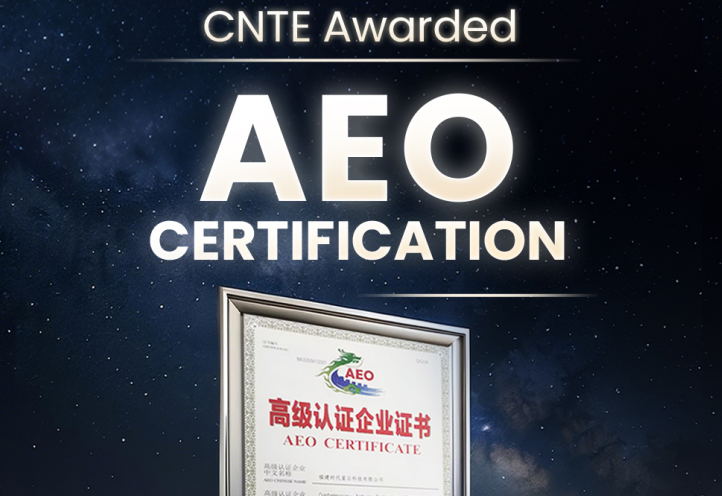
CNTE awarded AEO certification
Mar 14, 2025
Tags
- 1 mw battery storage
- 500 kw battery
- 500 kw battery storage
- 500 kwh battery price
- 500 kwh battery storage
- 50kw solar battery storage
- all in one solar battery
- at home battery
- battery based energy storage
- battery capacity for solar system
- battery electric storage system
- battery energy storage system price
- battery pack for home solar system
- battery pack house
- battery pack kwh
- battery power storage systems
- battery storage applications
- battery storage device
- battery storage kwh
- battery storage price per kwh
- battery storage suppliers
- battery storage system design
- battery that can power a house
- battery to grid
- bess battery energy
- bess solar system
- better battery renewable energy
- buy battery storage
- buy solar battery storage
- charging station
- chinese solar batteries
- clean energy storage solutions
- commercial solar power battery storage
- cost of solar and battery system
- cost of solar power battery storage
- electric battery storage system
- electrical energy storage exhibition
- energy battery pack
- energy storage battery pack
- energy storage system lithium battery
- energy storage system price
- energy storage system solar
- energy tech battery
- ess battery price
- ess battery system
- ess solar battery
- ess solar system
- ev battery for solar storage
- ev battery solar storage
- green energy lithium battery
- high capacity battery for solar panels
- hybrid battery storage
- its technology solar
- kwh battery storage
- large batteries for solar storage
- large battery for solar energy storage
- large battery storage container
- large battery storage systems
- large solar battery storage
- large solar battery storage systems
- large solar storage batteries
- largest commercial battery
- latest solar batteries
- lithium batteries for off grid solar system
- lithium batteries from china
- lithium battery for off grid solar
- lithium battery for solar system price
- lithium battery home storage
- lithium battery packs for solar panels
- new battery storage
- off grid solar battery storage
- on grid battery
- optical storage integration
- outdoor energy storage
- outdoor solar battery cabinet
- pcs battery system
- power pack energy
- power storage cells
- price per kwh battery storage
- q cell battery storage
- smart battery storage
- solar and lithium batteries
- solar batteries inside house
- solar battery battery
- solar battery container
- solar battery kwh
- solar battery module
- solar battery storage cabinet
- solar battery storage capacity
- solar battery storage container
- solar battery storage manufacturers
- solar battery to power house
- solar cell storage
- solar energy battery storage capacity
- solar energy battery storage system
- solar energy lithium battery
- solar energy storage system price
- solar energy storage technology
- solar ess system
- solar grid battery
- solar grid battery system
- solar installation battery
- solar one batteries
- solar panel battery storage capacity
- solar panel battery storage price
- solar panel energy storage battery
- Solar panel energy storage systems
- solar panel lithium battery storage
- solar panel power storage system
- solar plant battery
- Solar Power Plant Battery
- solar pv and battery storage systems
- solar pv system with battery storage
- solar storage solutions
- solar with battery system
- solar with lithium battery storage
- standalone energy storage systems
- storage energy battery
- storedge battery
