
Complete Guide to Solar Battery Storage Installation in 2026: From Homes to Multi-Megawatt Sites
Are you planning a residential energy backup or deploying a multi-megawatt industrial site? Getting your energy storage infrastructure right requires careful planning, strict code adherence, and tier-one hardware integration. Contemporary Nebula Technology Energy Co., Ltd. (CNTE) engineers and supplies industry-grade energy storage systems engineered for safety and performance. Submit an inquiry to our technical team to receive site-specific design calculations and equipment schedules for your project.
1. Introduction: The Evolution of Solar Battery Storage in 2026
Modern power grids face structural instability. Extreme weather events, aggressive time-of-use (TOU) utility rate spreads, and the retirement of baseload thermal plants have changed energy economics. Batteries are no longer simple backup accessories; they are vital dispatch assets.
Executing a reliable solar battery storage installation now requires an integrated engineering mindset. In 2026, storage projects incorporate dynamic software controls, participate in virtual power plants (VPPs), and comply with stringent fire and safety mandates.
Whether you manage a 10 kWh residential project or an interconnected 50 MWh utility facility, deployment success depends on meticulous planning. CNTE designs modular, smart energy solutions to address these evolving demands across commercial, industrial, and microgrid sectors worldwide.
2. Core Fundamentals: How Solar Battery Storage Works
Every battery energy storage system (BESS) stores intermittent direct current (DC) power from photovoltaic arrays for dispatch on demand. However, the electrical architecture changes how you install and operate that hardware.
AC Coupling vs. DC Coupling: Which is Right for Your Installation?
Choosing between alternating current (AC) and direct current (DC) coupling determines installation complexity, component selection, and efficiency.
- DC-Coupled Systems: The PV array and battery bank connect to a shared hybrid inverter on a single DC bus. This design eliminates double conversion losses (DC to AC to DC), reaching round-trip efficiencies above 90%. It is the standard choice for greenfield utility and residential installations.
- AC-Coupled Systems: The battery connects directly to the AC distribution panel through its own dedicated inverter-charger. This architecture excels in solar retrofit situations. Installers avoid disrupting existing solar string inverters, saving engineering hours and rewiring costs.
Battery Chemistries in 2026: LFP, Sodium-ion, and Beyond
Lithium Iron Phosphate (LiFePO4 or LFP) remains the dominant chemistry for stationary installations. Its superior thermal stability, non-toxic composition, and 6,000+ cycle lifespan make it the baseline standard for residential and commercial enclosures.
At the same time, sodium-ion batteries are securing market share in large stationary projects. While their volumetric energy density is lower than LFP, sodium-ion units deliver outstanding low-temperature performance (-40°C without auxiliary pre-heating) and lower raw-material risk. Solid-state variants are also entering controlled pilot stages for high-density footprints.
3. The Step-by-Step Solar Battery Storage Installation Process
Executing a seamless solar battery storage installation demands structured phases. Missing a step often causes permitting rejections, equipment damage, or commissioning delays.
Phase 1: Site Assessment & System Sizing
Engineers first gather 12 to 24 months of historical load data at 15-minute intervals. This step confirms peak kVA demands, inductive motor starting surges, and base loads.
Physical site reviews evaluate surface load-bearing capacity (particularly for concrete pads carrying multi-ton outdoor units), proximity to the main service panel, working clearances, and ambient temperature exposure.
Phase 2: Permitting, Codes, and Interconnection
Storage systems must comply with rigorous local and international safety codes. Engineers submit structural calculations, single-line diagrams (SLD), and hazard mitigation plans to the local Authority Having Jurisdiction (AHJ).
Installations must satisfy safety baselines including NFPA 855 standards, alongside UL 9540 system certifications and UL 9540A unit thermal runaway burn test documentation.
Phase 3: Physical & Electrical Installation
Crews place mounting pads, bolt cabinets securely, and run balance-of-system (BOS) components. Electricians install raceways, disconnect switches, and overcurrent protection devices (OCPD).
High-voltage DC wiring requires precise torque verification, proper ground fault detection interrupters (GFDI), and dedicated equipment grounding conductors (EGC) to eliminate stray currents and flashover hazards.
Phase 4: Commissioning, Testing & Handover
Technicians verify phase rotation, insulation resistance (megger testing), and communications links across CAN bus, Modbus, or Ethernet protocols.
The commissioning team then executes firmware updates, programs energy management system (EMS) dispatch modes, and performs a complete black-start islanding test to prove off-grid transitions under dynamic loads.
4. Scaling Up: Installation Differences from Residential to Multi-Megawatt
The core operating principles remain identical across scales, but physical deployment challenges diverge significantly as capacity increases.
Residential Systems (5kWh – 30kWh): Compact & Wall-Mounted
Residential setups focus on rapid wall or ground mounting inside garages, utility rooms, or exterior shaded walls. Technicians integrate critical-load subpanels or intelligent backup gateways to automate circuit isolation within 16 milliseconds of a grid failure.
Commercial & Industrial (C&I) Systems (100kWh – 2MWh): Peak Shaving Focus
C&I installations prioritize demand-charge reduction, power-factor correction, and critical load protection. These systems tie into medium-voltage or 480V three-phase switchboards.
Installations feature centralized liquid cooling units and external transformers. CNTE supplies factory-integrated C&I power storage cabinets that minimize on-site civil works and streamline connection to existing facility management systems.
Utility-Scale & Multi-Megawatt Sites (5MWh+): Containerized BESS
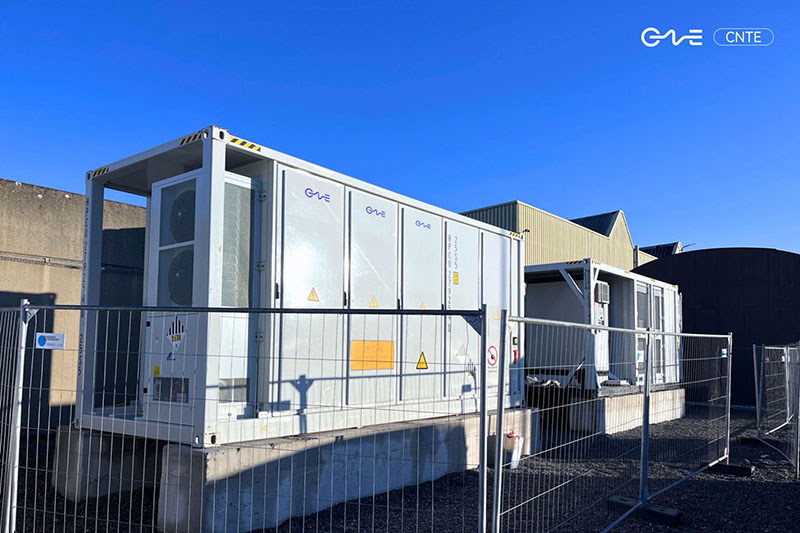
Utility-scale projects deploy 20-foot or 40-foot ISO intermodal containers storing 3.5 MWh to 5 MWh each. Heavy civil foundations, dedicated access roads, stormwater management, and high-voltage (HV) substation hookups are mandatory.
Site logistics require mobile cranes, strict step-and-touch potential grid grounding, and SCADA telemetry matching regional Transmission System Operator (TSO) standards.
5. Critical Installation Factors: Safety, Codes, and Environmental Controls
Safety parameters determine whether an energy storage facility gains operational clearance or faces sudden shutdown.
Fire Safety & Thermal Runaway Mitigation in 2026
Lithium-ion cells present thermal runaway risks when exposed to internal shorts, mechanical abuse, or overcharging. Contemporary installations rely on multi-tier protection:
- Early gas detection systems monitoring off-gassing hydrogen, carbon monoxide, and volatile organic compounds (VOCs).
- Aerosol extinguishing agents or targeted water-deluge manifolds connected to active fire department connections (FDC).
- Internal deflagration venting doors directed away from pedestrian corridors or adjacent battery units.
- Full validation through recognized safety testing bodies such as UL Standards.
Climate Control & Operating Temperature
Battery lifecycle degrades when cells operate continuously outside the 15°C to 30°C window. Liquid cooling has broadly replaced forced-air systems in installations over 100 kWh.
Liquid systems use circulating glycol solutions through cold plates directly touching cell packs. This thermal uniformity limits temperature variance across modules to within ≤2.5°C, preventing localized cell degradation and boosting cycle efficiency.
6. Cost Analysis: What Drives Solar Battery Storage Installation Costs?
Budgeting for battery deployments involves hardware capital expenditure (CapEx), balance-of-plant materials, civil works, and labor. The table below outlines average turnkey market costs in 2026:
| System Scale | Average Capacity | Turnkey Cost ($/kWh Installed) | Primary Cost Drivers |
|---|---|---|---|
| Residential | 10 kWh – 20 kWh | $700 – $1,050 | Labor, soft costs (permitting), hybrid inverters, backup panels |
| Commercial & Industrial (C&I) | 200 kWh – 1 MWh | $420 – $650 | Switchgear upgrades, fire suppression, custom site engineering |
| Utility-Scale | 10 MWh – 100 MWh+ | $260 – $380 | HV substations, land prep, civil concrete, SCADA integration |
ROI and Payback Periods with Smart Tariffs & VPP Revenues
According to analytical data from institutions like the National Renewable Energy Laboratory (NREL), declining battery pack costs paired with smart dispatch optimization generate typical project paybacks between 4 and 7 years.
Facilities monetize assets by capturing negative grid pricing, providing frequency response, and participating in capacity reserves without interrupting on-site manufacturing routines.
7. Common Installation Mistakes and How to Avoid Them
Avoidable errors during the design and installation phase can derail budgets and timelines:
- Undersizing for Inrush Currents: Inductive loads, like water chillers or industrial compressors, draw 3x to 6x their continuous run current at start-up. Sizing inverters strictly on running watts triggers nuisance overload trips during off-grid operations.
- Neglecting Utility Interconnection Timelines: Grid impact studies routinely take three to nine months for three-phase commercial systems. Begin interconnection applications during early conceptual site design.
- Inadequate Space for Thermal Servicing: Cramming enclosures into tight corners saves floor space but violates mandatory NEC 110.26 working spaces and restricts airflow, speeding up thermal component wear.
- Ignoring Local Soil and Environmental Factors: Placing heavy battery slabs on uncompacted soil causes slab cracking and busbar strain over time. Coastal sites require C5-M marine-grade anti-corrosion coatings.
8. Frequently Asked Questions (FAQs)
Q1: How long does a commercial solar battery storage installation typically take?
A1: Turnkey delivery takes 3 to 9 months depending on scale. Physical construction takes only 2 to 4 weeks. The remaining timeline goes toward structural engineering reviews, municipal utility interconnection approvals, and AHJ inspections.
Q2: Can I add a battery to an existing solar system without replacing the inverter?
A2: Yes, by using an AC-coupled configuration. The battery system runs on its own inverter connected to the main electrical panel, functioning alongside your current solar string inverter without voiding existing warranties.
Q3: What are the main safety codes for BESS installation in 2026?
A3: Primary benchmarks include NFPA 855 (Standard for the Installation of Stationary Energy Storage Systems), UL 9540 (safety certification for systems and equipment), UL 9540A (flire propagation testing), and National Electrical Code (NEC) Article 706.
Q4: How do commercial battery installations differ from utility-scale?
A4: Commercial setups tie directly behind-the-meter (BTM) at 480V to reduce facility demand charges and provide local backup. Utility installations connect front-of-the-meter (FTM) directly into transmission or distribution networks at medium-to-high voltages to manage bulk grid capacity.
Q5: What routine maintenance is required after commissioning?
A5: Annual preventative servicing includes checking terminal torque settings via thermal imaging, inspecting liquid coolant pH and levels, testing HVAC and filtration, validating emergency stops, and confirming gas detection sensors.
9. Conclusion & Next Steps
A well-planned solar battery storage installation shields facilities from power disruption and turns volatile electricity prices into financial savings. As safety codes advance and grid demands shift toward decentralized architectures, partnering with seasoned engineering teams is the best way to ensure project success.
CNTE (Contemporary Nebula Technology Energy Co., Ltd.) provides high-yield, containerized and modular energy storage hardware tested to the highest international safety thresholds. Are you ready to develop your clean energy asset? Contact our engineering division today to request a full technical review and project estimate.
Get in Touch
Recent Posts
-
CNTE Included in BloombergNEF's Q4 2026 Tier 1 Energy Storage Manufacturers
Nov 03, 2026 -
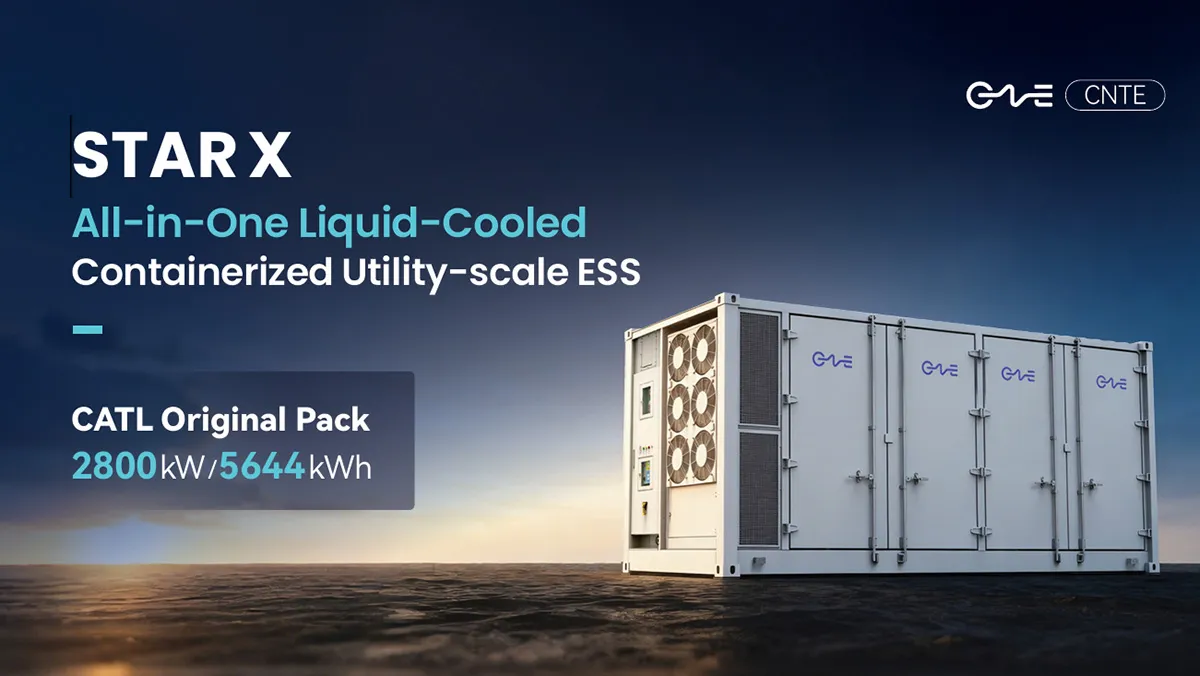
CNTE Launches STAR X Liquid-Cooled DC/AC Integrated Energy Storage System at Intersolar Europe 2026
Jul 06, 2026 -
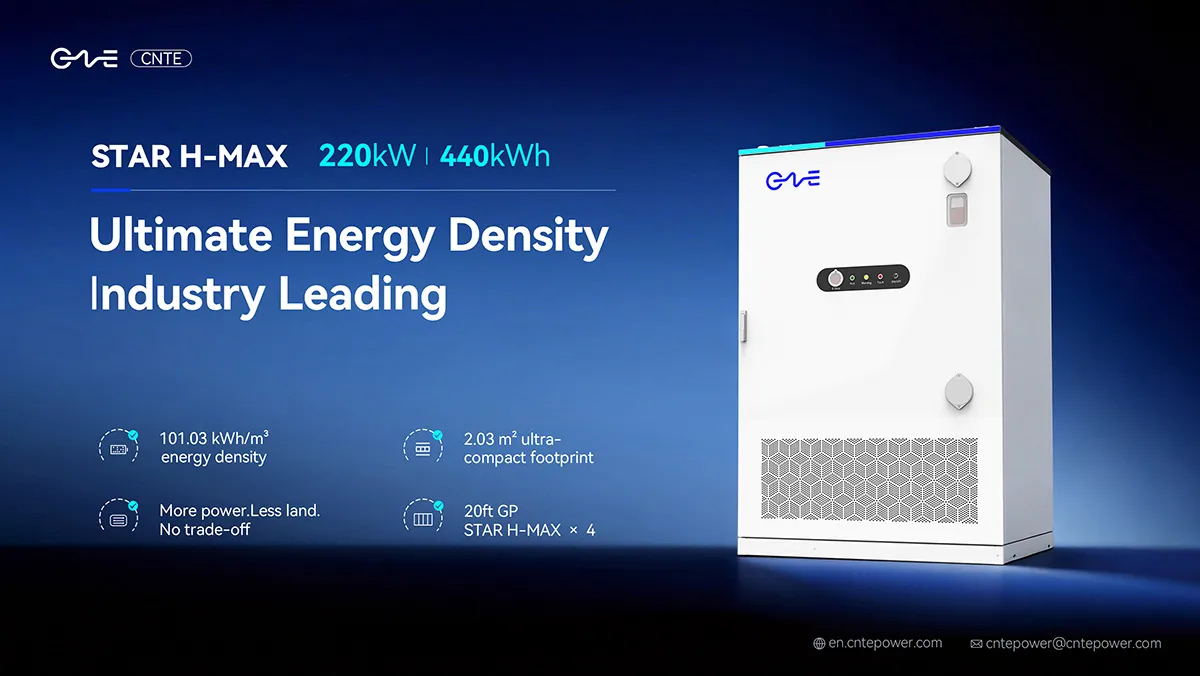
CNTE Unveils New STAR H-MAX Liquid-Cooled C&I ESS at Intersolar Europe 2026
Jun 23, 2026 -
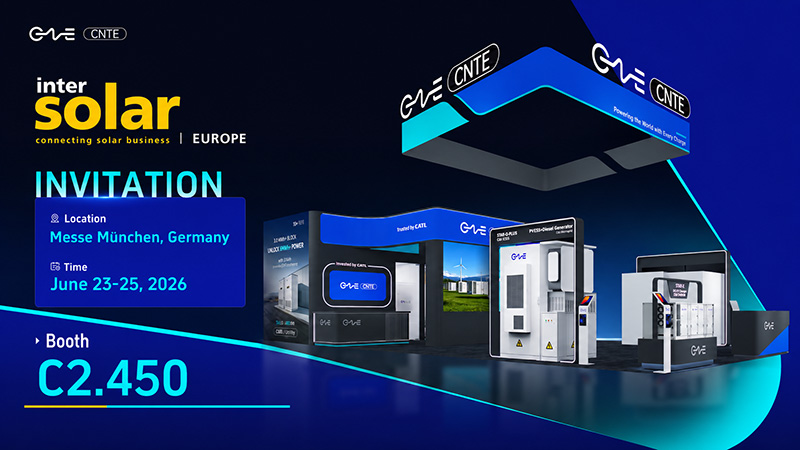
CNTE to Participate in Intersolar Europe 2026
May 20, 2026 -
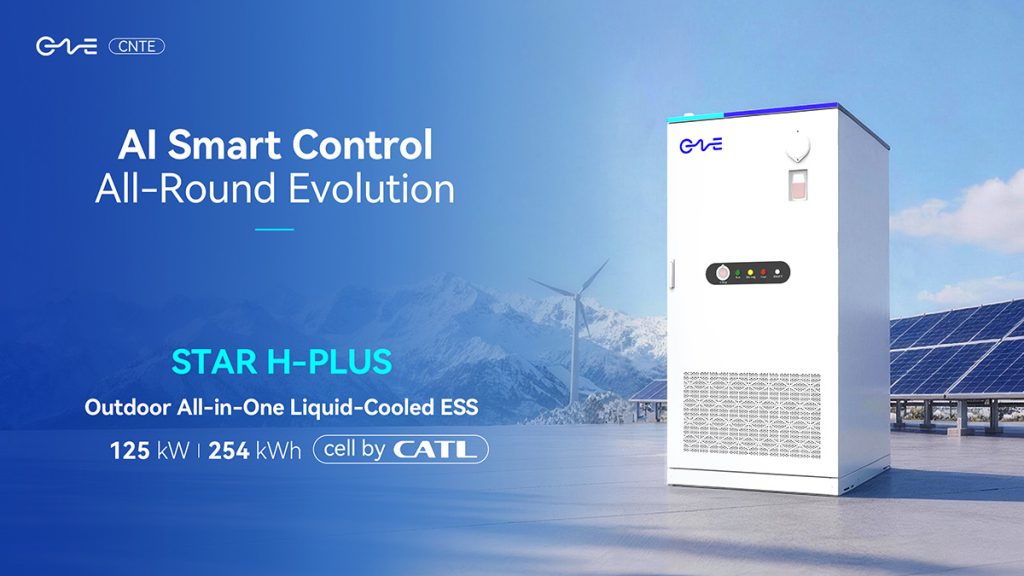
CNTE at KEY ENERGY 2026: Showcases STAR H-PLUS Outdoor Liquid-Cooled Energy Storage System
Mar 05, 2026 -

CNTE Honored as 2025 Forbes China Leading Global Brand
Jul 06, 2026 -

CNTE & YOU.ON Partner to Expand Storage Markets
May 19, 2025 -

CNTE Unveils Energy Storage Lineup at Solartech 2025
May 19, 2025 -

CNTE awarded AEO certification
Jul 06, 2026 -
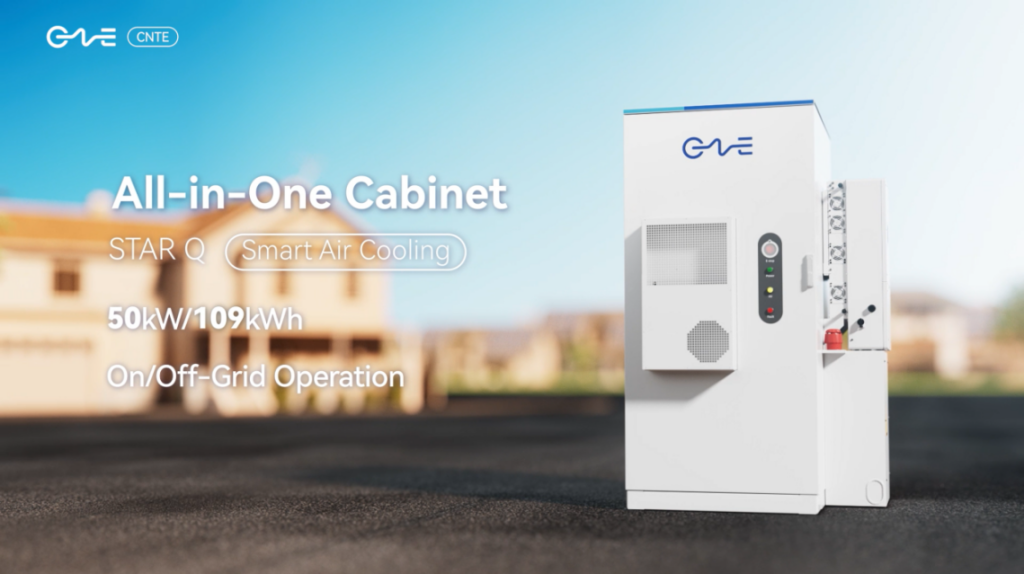
CNTE New Product Launch STAR Q
Jan 15, 2025
