
Commercial Battery Storage for Solar: Engineering Topologies for C&I Energy Management
Commercial facilities face unprecedented changes in energy procurement. Utility tariff restructurings, escalating demand charges, and the reduction of net metering credits have altered how enterprises interact with the electrical grid. Integrating commercial battery storage for solar offers a pathway to stabilize operational expenditures, mitigate energy price volatility, and secure high-availability power for medium- and high-voltage commercial facilities.
Modern behind-the-meter (BTM) storage deployment is no longer an auxiliary option for solar arrays. It serves as an active power management interface between on-site photovoltaic generation, internal facility loads, and regional transmission networks. Evaluating energy storage configurations requires a granular understanding of power conversion architectures, cell-level electrochemical behavior, dispatch algorithms, and lifecycle financial modeling.
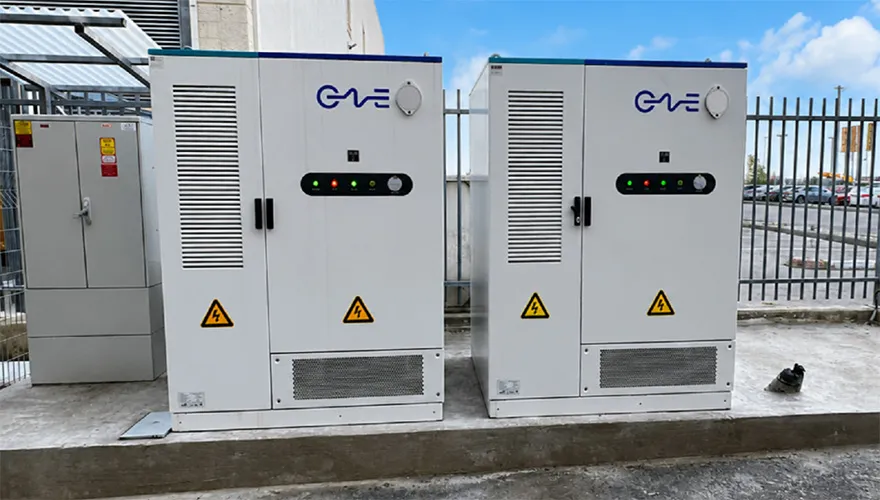
Engineering Topologies for Commercial Battery Storage for Solar
Choosing the correct integration topology dictates round-trip efficiency (RTE), physical footprint, upfront balance-of-system (BOS) capital costs, and long-term serviceability. Commercial installations center on two primary power conversion topologies:
1. AC-Coupled System Architectures
In an AC-coupled configuration, the solar array and the battery storage system utilize independent inverter platforms. Photovoltaic modules connect to standard grid-tied string or central solar inverters that output alternating current (AC). The battery energy storage system (BESS) connects via a dedicated bidirectional power conversion system (PCS) to the facility main AC distribution switchboard.
Retrofit Flexibility: AC coupling integrates directly into facilities with pre-existing commercial solar arrays without altering certified string sizing, DC combiner boxes, or existing inverter warranties.
Independent Subsystem Redundancy: Fault conditions within the solar inverter platform do not disrupt battery charge and discharge operations from the grid, ensuring continuous facility load balancing.
Multi-Bus Versatility: The BESS can be situated physically distant from the rooftop or ground-mount solar arrays, connecting at the main service panel or downstream distribution sub-panels.
2. DC-Coupled System Architectures
DC-coupled topologies route both photovoltaic strings and the battery storage sub-assemblies to a shared DC bus via DC-to-DC converters before converting to AC through a centralized, high-efficiency hybrid inverter.
Clipping Energy Recapture: When solar generation exceeds the maximum AC rating of the inverter (inverter loading ratios typically exceeding 1.3:1), excess DC power charges the battery bank directly without undergoing DC-to-AC-to-DC conversion losses.
Conversion Efficiency: Avoiding multiple inversion stages yields higher round-trip conversion efficiencies during simultaneous daytime solar production and charging cycles.
Reduced Switchgear Requirements: Utilizing a single point of interconnection (POI) minimizes the footprint required for medium-voltage switchgear and protective relays.
Electrochemical Selection and Thermal Regulation Standards
Selecting appropriate battery chemistry determines cycle longevity, volumetric energy density, and thermal behavior under high-stress C-rate conditions. Commercial and industrial (C&I) platforms rely predominantly on Lithium Iron Phosphate (LiFePO4 / LFP) chemistry due to its superior crystal stability, extended cycle life, and inherent resistance to self-sustained thermal events.
LFP systems deliver between 6,000 and 10,000 full equivalent cycles at an 80% to 90% Depth of Discharge (DoD) before degrading to 70% of initial nameplate capacity. In multi-megawatt-hour installations developed by tier-one providers such as CNTE (Contemporary Nebula Technology Energy Co., Ltd.), cell-level temperature uniformity remains a core design priority. Advanced liquid-cooling thermal management systems maintain intra-rack cell temperature differentials within 2 to 3 degrees Celsius, suppressing localized accelerated degradation and uneven internal resistance growth.
Thermal management also dictates compliance with safety certifications. Commercial projects require validation against UL 9540 (Energy Storage Systems and Equipment) and UL 9540A test methodologies to prevent thermal runaway propagation. Outdoor modular enclosures incorporating integrated aerosol fire suppression, deflagration venting panels, and gas detection sensors satisfy municipal building codes while maintaining high system uptime.
Operational Value Streams and Automated Dispatch Logic
The economic return of commercial battery storage for solar is governed by dynamic revenue and cost-avoidance streams executed through programmable Energy Management Systems (EMS):
Demand Charge Mitigation (Peak Shaving)
Utility bills for manufacturing facilities, data centers, and distribution hubs are frequently dominated by peak demand charges—levied against the highest single 15-minute average power demand recorded during a billing cycle. BTM storage systems monitor facility load meters in real time. When total power draw crosses a defined threshold, the PCS injects battery power to cap the peak drawn from the utility grid, flattening the facility load curve without curtailing operational throughput.
Time-of-Use (TOU) Tariff Arbitrage
In jurisdictions with pronounced peak and off-peak rate differentials, automated dispatch profiles charge the battery bank during periods of low tariff rates (or via zero-marginal-cost solar generation) and discharge during peak utility pricing windows. This operation eliminates high-cost grid imports during late afternoon and early evening hours when solar generation drops while commercial power tariffs climb.
Capacity Firming and Ramp-Rate Control
Intermittent cloud cover causes rapid swings in photovoltaic power production, creating localized voltage variations and power factor instability on the local grid. Integrated battery storage smooths out these rapid output fluctuations by rapidly absorbing excess power or discharging short-burst reserves, satisfying utility interconnection limits for solar ramp rates.
Resilience and Microgrid Islanding
When grid outages occur, an intelligent commercial storage platform paired with an automated transfer switch (ATS) disconnects from the grid and establishes a local voltage reference via grid-forming inverters. The system forms a stable islanded microgrid, balancing variable solar generation with essential facility loads to maintain operations without interruption.
BMS, EMS, and Enterprise SCADA Integration
Maximizing system availability requires a multi-tier control architecture spanning physical battery racks to enterprise energy analytics platforms.
The Battery Management System (BMS) operates at the lowest control layer, executing millivolt-level cell monitoring, active balancing, thermal measurement, and immediate over-current or over-temperature protection. This layer communicates over deterministic industrial protocols (such as Modbus TCP/IP or CAN bus) to the site-level Energy Management System (EMS).
The EMS acts as the intelligence hub. Contemporary platforms engineered by CNTE utilize edge-computing controllers running dynamic dispatch engines. These algorithms incorporate weather forecasting models, historical facility load profiles, day-ahead wholesale electricity price signals, and state-of-health (SoH) tracking. By constantly analyzing these inputs, the EMS determines whether to store solar power, discharge for demand suppression, or participate in utility demand response programs.
At the highest operational tier, Supervisory Control and Data Acquisition (SCADA) systems link multi-site energy storage assets to centralized Network Operations Centers (NOC), enabling remote firmware upgrades, predictive fault diagnostics, and compliance reporting without requiring full-time on-site personnel.
Financial Modeling: Levelized Cost of Storage (LCOS) and ROI
Accurate feasibility studies calculate both Capital Expenditures (CapEx) and operational variables through the Levelized Cost of Storage (LCOS). The LCOS equation incorporates initial installed capital costs, operations and maintenance (O&M), auxiliary parasitic power consumption (HVAC and BMS power draw), charging energy costs, and battery capacity fade rates over a 15-to-25-year service life.
Key financial considerations include:
Inverter Sizing and C-Rate Matching: Sizing the PCS to the specific load profile prevents over-capitalizing power capacity when longer duration (0.25C to 0.5C, 2-to-4 hour duration) energy capacity is required.
Incentive Structures: Monetizing federal, state, and regional incentives—such as the U.S. Investment Tax Credit (ITC) with domestic content adders or European decarbonization subsidies—reduces payback periods to 3 to 6 years in favorable utility territories.
Degradation and Augmentation Strategies: Systems planned with an augmentation schedule (installing supplementary battery capacity at year 8 or 10) maintain minimum guaranteed output without over-sizing the day-one initial investment.
Frequently Asked Questions
What is the typical lifespan of commercial battery storage for solar?
Industrial-grade LFP battery systems are rated for 6,000 to 10,000 cycles under controlled thermal environments. When operated under standard 1-to-2 cycle per day profiles for peak shaving and solar shifting, these systems typically provide an operational lifespan of 15 to 20 years before reaching their defined end-of-life capacity threshold.
How does commercial battery storage for solar handle rapid load changes?
Modern power conversion systems equipped with digital signal processors (DSPs) respond to load variations in under 20 to 50 milliseconds. This rapid response allows the battery to absorb heavy inductive motor-start surges or compensate for sudden solar drops without transferring voltage sags to sensitive commercial equipment.
Can battery storage be retrofitted to an existing commercial solar array?
Yes. Retrofits are predominantly implemented using AC-coupled topologies. The battery storage container and dedicated inverter tie directly into the facility low- or medium-voltage AC switchboard. This avoids the need to rewire existing PV array combiners, replace functioning solar inverters, or void manufacturer warranties on existing solar hardware.
What balance-of-plant components are included in a turnkey commercial storage container?
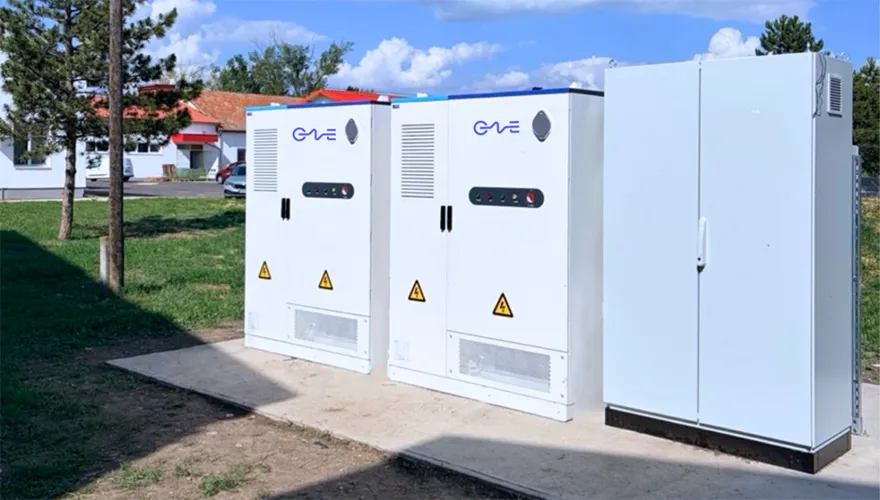
A complete commercial storage enclosure includes the high-capacity battery cell modules, racking, Battery Management System (BMS), bidirectional PCS, thermal management (liquid chillers or HVAC), fire detection and aerosol suppression systems, internal deflagration panels, communication gateways, and integrated AC/DC distribution switchgear.
How do liquid-cooled systems compare with air-cooled commercial batteries?
Liquid-cooled systems offer superior thermal conductivity, consuming up to 30% less auxiliary power than traditional HVAC air-cooling units. They maintain tighter temperature uniformity across thousands of cells, which directly slows capacity degradation, prevents thermal hotspots, and permits higher continuous charge and discharge C-rates in compact footprints.
Procurement and Custom System Sizing
Executing an industrial energy transition requires pairing matched hardware with utility-compliant control logic. CNTE provides complete engineering consultation, sizing simulations, and scalable energy storage architectures configured for high-demand industrial facilities, logistics hubs, and commercial microgrids.
Contact our application engineering team to request a site-specific load profile analysis, financial modeling report, and hardware specification schedule for your upcoming commercial battery storage for solar installation.
Get in Touch
Recent Posts
-
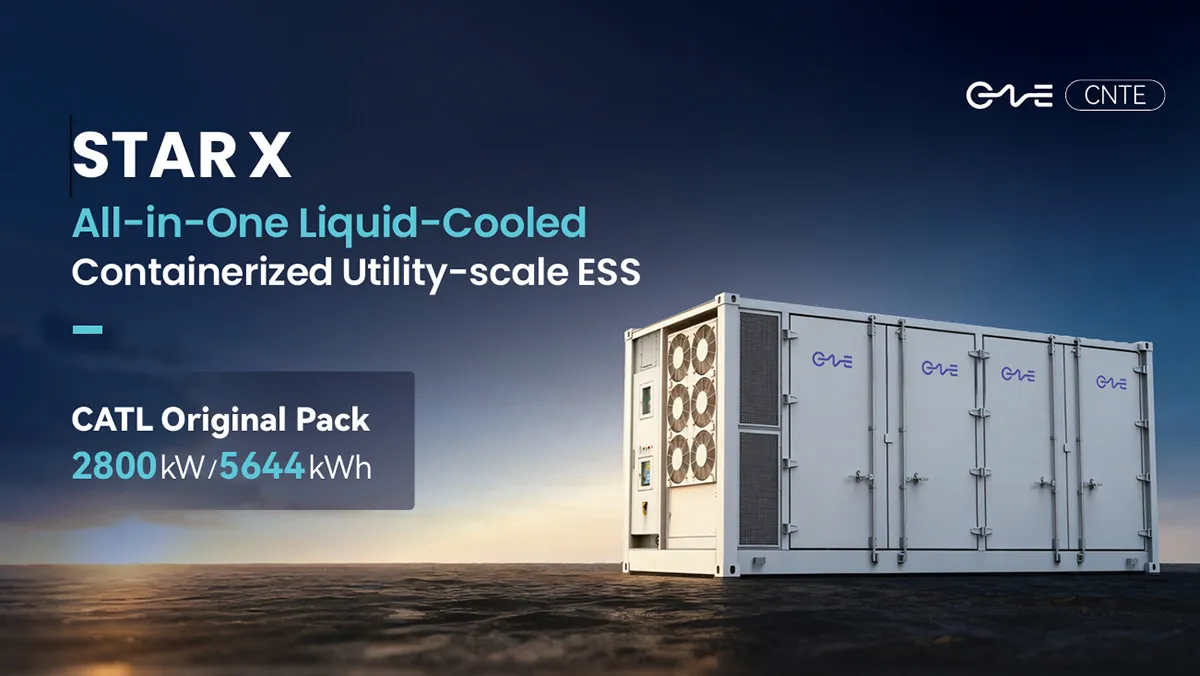
CNTE Launches STAR X Liquid-Cooled DC/AC Integrated Energy Storage System at Intersolar Europe 2026
Jul 06, 2026 -
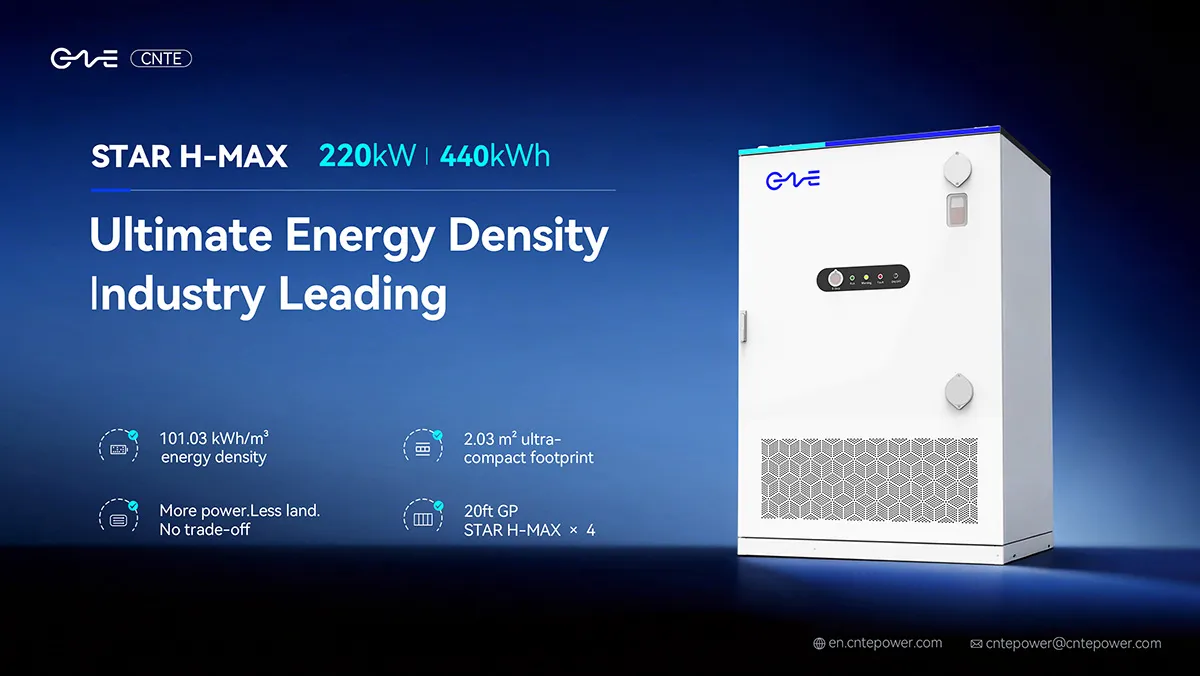
CNTE Unveils New STAR H-MAX Liquid-Cooled C&I ESS at Intersolar Europe 2026
Jun 23, 2026 -
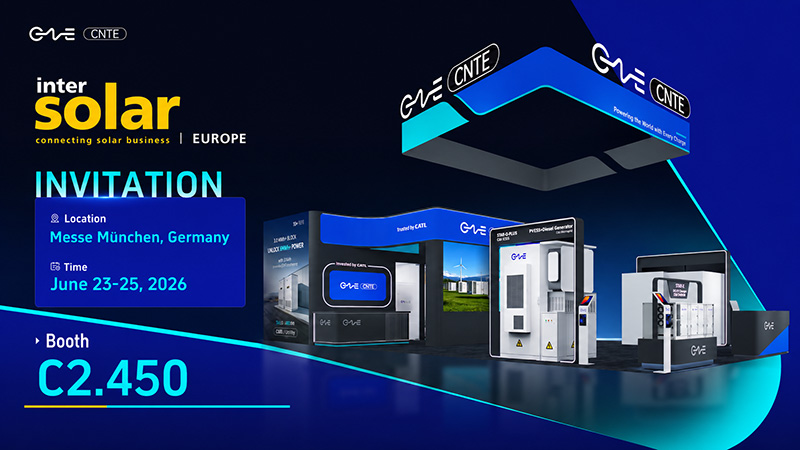
CNTE to Participate in Intersolar Europe 2026
May 20, 2026 -
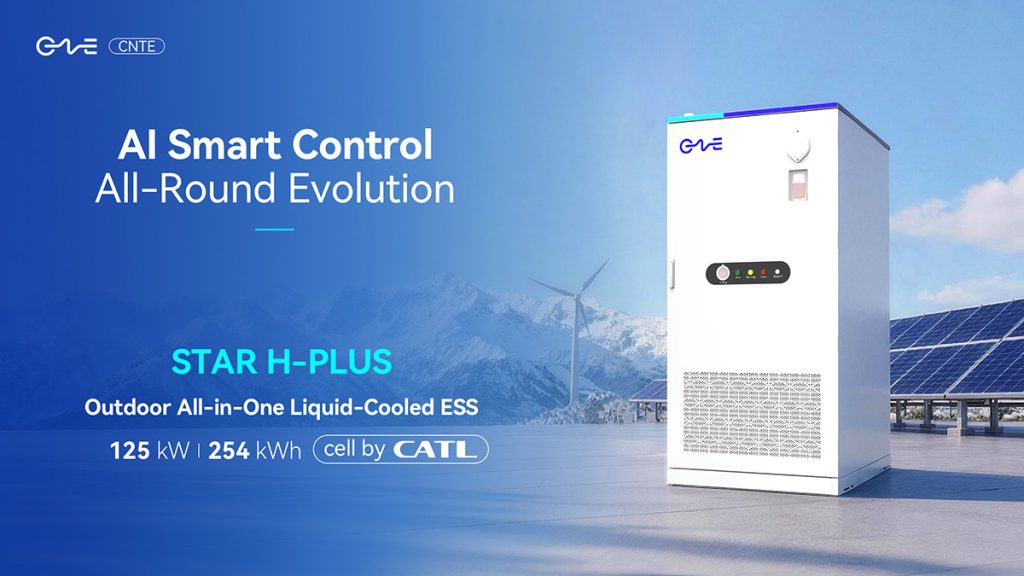
CNTE at KEY ENERGY 2026: Showcases STAR H-PLUS Outdoor Liquid-Cooled Energy Storage System
Mar 05, 2026 -

CNTE Honored as 2025 Forbes China Leading Global Brand
Jul 06, 2026 -

CNTE & YOU.ON Partner to Expand Storage Markets
May 19, 2025 -

CNTE Unveils Energy Storage Lineup at Solartech 2025
May 19, 2025 -
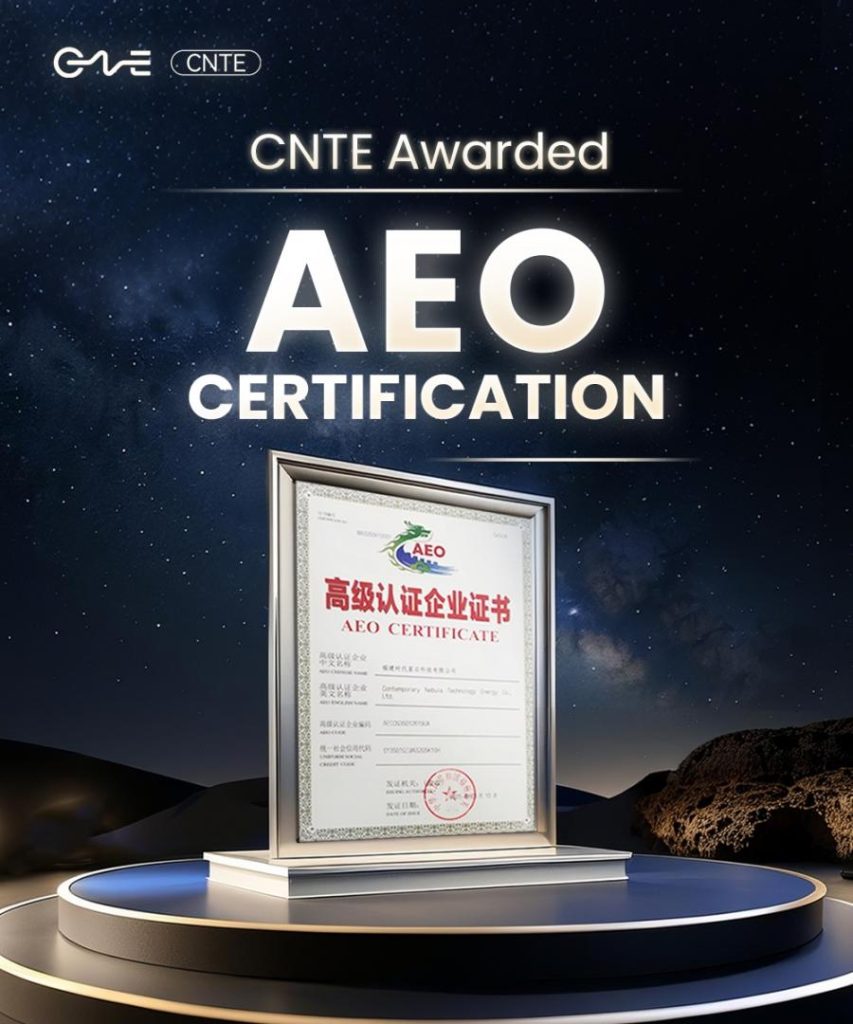
CNTE awarded AEO certification
Jul 06, 2026 -
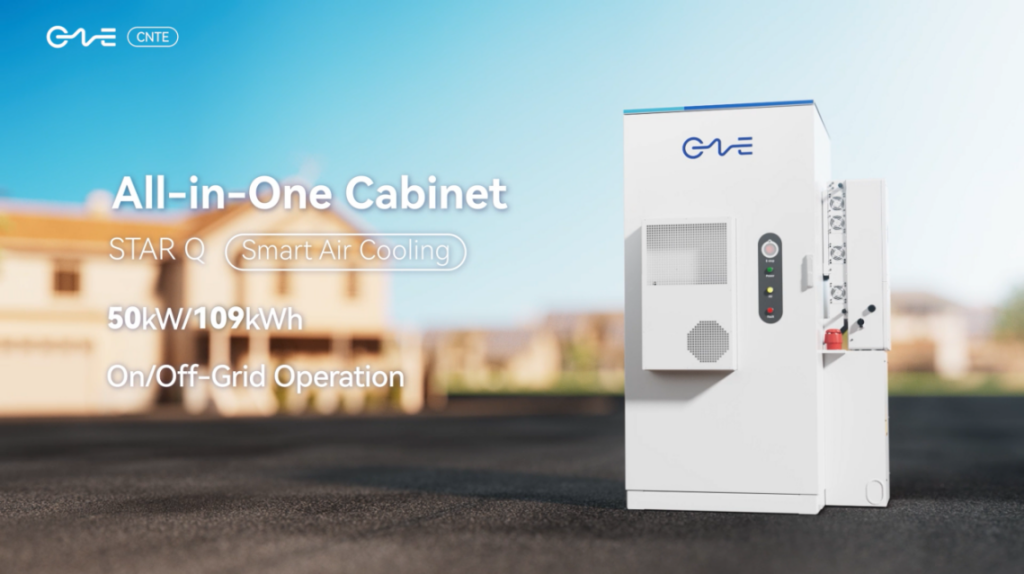
CNTE New Product Launch STAR Q
Jan 15, 2025 -

CNTE Named to Forbes China 2024 Top 30 Go-International Brands
Jul 06, 2026
