
Battery in Solar System: Technical Deep Dive on Coupling Architectures, Degradation Control, and Economic Dispatch
Integrating a battery in solar system transforms a standard photovoltaic array from a variable power source into a dispatchable energy asset. For commercial and industrial facilities, the addition of storage enables peak demand reduction, time-of-use arbitrage, backup capability, and increased self-consumption of generated solar energy. However, the performance of any solar-plus-storage system depends on more than component specifications—the battery in solar system must be matched to load profiles, local tariff structures, and the existing inverter topology. This article examines seven critical engineering factors: coupling methods (DC vs. AC), charge/discharge rate (C‑rate) selection, thermal management strategies, state-of-charge (SoC) operating windows, integration with backup generators, and levelized cost of storage (LCOS) calculations. All analysis is grounded in field data from commercial installations, avoiding generic claims while respecting existing grid-connected assets.
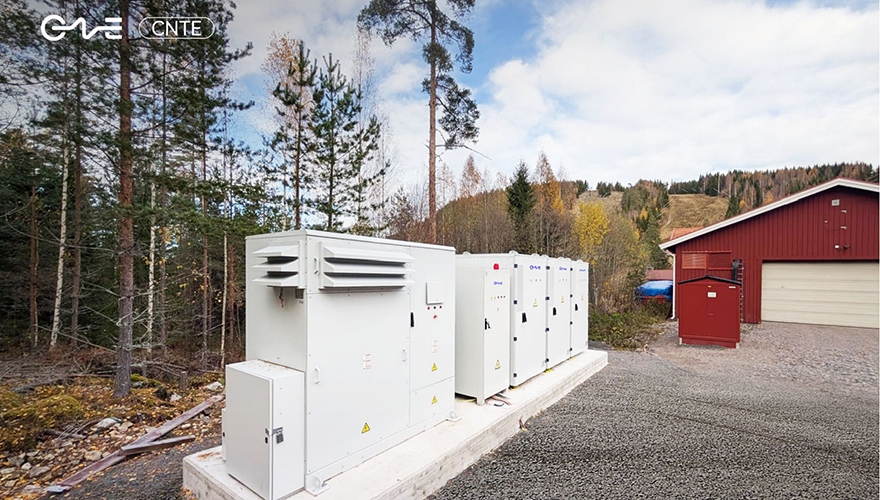
Why Add a Battery in Solar System? Economic and Operational Drivers
For a facility with existing solar PV, the decision to add storage hinges on three quantifiable benefits. First, peak load shaving: the battery discharges during short intervals of high grid draw, reducing demand charges that often constitute 30-60% of commercial electricity bills. Second, solar self-consumption increase: without storage, midday overgeneration may be exported at low feed-in tariffs (or curtailed). A battery captures this surplus and shifts it to evening peak periods, raising on-site consumption from typical 40% to 80% or higher. Third, grid services revenue: in deregulated markets, a properly equipped battery can provide frequency regulation or capacity reserves without affecting primary solar operations.
Each driver imposes different requirements on the battery in solar system. Peak shaving demands high power (C‑rate of 0.5C to 1C) but short duration (1-2 hours). Self-consumption requires medium power but longer duration (4-6 hours) to cover evening loads. Grid services often need sub-second response and frequent partial cycles. A well-designed system balances these through an advanced energy management system (EMS).
DC Coupling vs. AC Coupling: Architecture Trade-Offs
When adding a battery in solar system, the physical connection method determines efficiency, cost, and retrofitting complexity.
DC-Coupled Configuration
- Battery connects to the same DC bus as the solar array, before the main inverter.
- Requires a DC-DC converter (charge controller) to match battery voltage to PV string voltage.
- Round-trip efficiency: 94-97% (solar to battery to load) because only one DC-AC conversion occurs.
- Ideal for new installations or when replacing an existing charge controller.
- Limitation: cannot charge battery from AC sources (e.g., grid or generator) without additional AC-DC converter.
AC-Coupled Configuration
- Solar inverter and battery inverter operate independently on the AC side.
- Battery charges from AC (either from solar via AC conversion or from grid).
- Round-trip efficiency: 88-92% due to double conversion (solar DC→AC→battery DC, then back).
- Preferred for retrofits: existing solar inverters remain unchanged; a battery inverter is added in parallel.
- Allows grid charging (for time-of-use arbitrage) and generator integration more easily.
For commercial systems above 100 kWp, AC coupling has become dominant because of flexibility. CNTE (Contemporary Nebula Technology Energy Co., Ltd.) provides pre-engineered AC-coupled battery cabinets with integrated EMS that synchronize with most commercial solar inverters (SMA, Fronius, Sungrow, Huawei).
Selecting Battery Chemistry for Solar-Plus-Storage
Not all batteries perform equally behind a solar array. The ideal battery in solar system must handle partial state of charge (PSoC) operation, irregular charge cycles due to cloud cover, and high ambient temperatures if outdoor installation is required.
- Lithium Iron Phosphate (LFP): Cycle life 6,000–10,000 cycles at 80% depth of discharge; round-trip efficiency 92-96%; minimal degradation under PSoC; built-in BMS with temperature cutoff. The most common choice for commercial solar storage.
- Nickel Manganese Cobalt (NMC): Higher energy density but shorter cycle life (3,000–5,000 cycles) and lower thermal runaway threshold. Less suitable for daily cycling in hot climates.
- Lead-carbon (PbC): Lower upfront cost but cycle life 2,000–3,500 cycles at 50% DoD; efficiency 80-85%. May be acceptable for seasonal solar storage (e.g., summer cabins) but not for daily commercial peak shaving.
A high-quality LFP battery paired with a compatible solar inverter delivers a levelized cost of storage (LCOS) between $0.08 and $0.12 per kWh over 15 years, compared to $0.18-$0.25 for lead-carbon.
Sizing Methodology: Power (kW) vs. Energy (kWh)
Proper sizing of a battery in solar system requires analyzing one year of 15-minute interval load data and solar generation data. Key formulas:
- Peak shaving power (kW) = maximum grid draw during a billing interval (e.g., 30-minute average) minus target demand limit. For a facility with a 500 kW peak and target 400 kW, battery power needed = 100 kW.
- Energy capacity (kWh) = peak shaving power × required duration (typically 2–4 hours) × inverter efficiency factor. For 100 kW over 2 hours = 200 kWh nominal capacity, derated to 240 kWh at 80% DoD.
- Solar self-consumption buffer = average daily excess solar generation during midday (kWh) × 1.2 (margin for variability). A 500 kWp solar array producing 2,000 kWh daily, with 800 kWh exported, would need 960 kWh of usable storage.
In many commercial cases, a single battery bank serves both functions: a 250 kW / 1,000 kWh system can shave peaks for 4 hours while also absorbing solar overgeneration. CNTE offers modular battery cabinets from 50 kW / 150 kWh up to 2 MW / 8 MWh, scalable in parallel.
Energy Management Strategies for Solar+Storage
The EMS logic determines whether a battery in solar system achieves projected ROI. Four common dispatch modes:
- Time-of-use (TOU) arbitrage: Battery charges during low-rate periods (e.g., midday solar or overnight grid) and discharges during peak-rate periods. Requires accurate forecasting of solar production and load.
- Peak shaving with forecast: EMS predicts daily load shape and reserves battery capacity to clip the highest 2-4 demand intervals. Uses historical data and real-time power measurement.
- Solar self-consumption maximization: Battery charges from PV whenever site load is less than PV production; discharges when load exceeds PV. Simple rule-based logic.
- Hybrid generator integration: For sites with backup generators, the EMS prevents simultaneous battery charging and generator operation, and can use generator to recharge battery during extended grid outages.
Advanced EMS platforms (such as CNTE’s Energy Intelligence Suite) incorporate weather forecasting and day-ahead pricing to optimize dispatch 24 hours ahead, improving annual savings by 12-18% compared to simple rule-based controls.
Thermal Management and Safety Compliance
Commercial solar-plus-storage systems are often installed outdoors or in non-conditioned electrical rooms. Battery cells generate heat during charging/discharging (approx. 3-5% of throughput power). Without adequate cooling, cell temperatures above 40°C accelerate degradation by 2-3x. Options:
- Passive cooling: For systems below 50 kW, natural convection with aluminum heat sinks may suffice in moderate climates.
- Forced air cooling: Fans with intake filters; adds 1-2% auxiliary load. Suitable up to 200 kW.
- Liquid cooling (refrigerant or glycol): Maintains cell temperature within 5°C of setpoint; adds 3-5% load but extends cycle life by 25-30% in hot climates.
Safety certifications for a battery in solar system include UL 9540 (system-level), UL 1973 (battery pack), and UL 9540A (thermal runaway propagation). For international projects, IEC 62619 and IEC 62477 apply. CNTE systems carry full UL and CE certifications, with integrated fire suppression (aerosol or gas-based) and gas detection.
Integrating with Existing Generators: A Practical Note
Many commercial facilities already have diesel or gas generators for backup. Adding a battery in solar system does not eliminate the generator—rather, the two operate in a coordinated hybrid mode. The battery handles short-duration outages (seconds to 2 hours) and provides instantaneous response, while the generator starts and synchronizes for extended outages. This hybrid approach reduces generator runtime by 70-90% during grid disturbances, cuts maintenance costs, and avoids the inefficiency of running generators at low load. The EMS must include a generator start/stop relay and voltage matching logic. CNTE’s hybrid controllers are pre-tested with major generator brands (Caterpillar, Cummins, Kohler, MTU) and support both islanded and grid-tied operation.

Financial Metrics: Payback Period and LCOS
To evaluate a proposed battery in solar system, calculate three numbers:
- Net annual savings = demand charge reduction ($) + TOU arbitrage savings ($) + avoided solar export losses ($) + any grid service revenue.
- Total installed cost = battery hardware + inverter/charger + EMS + installation + permitting.
- Simple payback (years) = total cost / annual savings. For commercial C&I projects in markets with $15-25/kW demand charges and TOU spreads >$0.10/kWh, paybacks of 4-7 years are typical.
Levelized cost of storage (LCOS) should be below the avoided cost of grid electricity. For LFP-based systems with 8,000 cycles at 80% DoD, LCOS ranges $0.08–0.12/kWh, which beats retail rates in most industrial tariffs ($0.12–0.25/kWh).
Frequently Asked Questions (FAQ)
Q1: Can I add a battery to my existing solar system without replacing the inverter?
A1: Yes, through AC coupling. The existing solar inverter remains unchanged; a new battery inverter is connected on the AC side, along with a battery bank. An energy meter monitors site load and solar export, directing the battery to charge or discharge accordingly. Most retrofit projects take 2-3 days with minimal disruption. CNTE offers retrofit kits with pre-configured AC-coupled inverters.
Q2: How many hours of backup power can a battery in solar system provide?
A2: That depends on the battery’s energy capacity and the critical load. For a 200 kWh battery supplying a 30 kW essential load (lighting, servers, refrigeration), runtime is approximately 200 kWh / 30 kW × 0.9 (inverter efficiency) = 6 hours. For longer outages, a generator is still recommended. The battery provides seamless transition during generator start-up.
Q3: What happens to the battery during a grid outage if I have solar but no generator?
A3: Most grid-tied solar inverters shut down automatically during outages for safety (anti-islanding). However, if your battery inverter supports islanding mode and the battery has sufficient charge, it can form a microgrid, allowing solar to continue charging the battery and powering selected backup loads. This requires a transfer switch and a system design explicitly for islanding.
Q4: How do I monitor the health and performance of my solar battery system?
A4: Modern systems include remote monitoring via cloud platform or on-site SCADA. Key metrics: state of charge (SoC), state of health (SoH), round-trip efficiency, number of cycles, and cell voltage/temperature logs. Alerts for cell imbalance, high temperature, or low SoC can be sent via email or SMS. CNTE’s monitoring portal provides 10-year data retention and predictive failure alerts.
Q5: Does adding a battery increase my facility’s insurance or code requirements?
A5: Yes, in many jurisdictions. NFPA 855 (US) and IEC 62485 (international) impose spacing, ventilation, and fire suppression requirements based on battery chemistry and stored energy (kWh). LFP systems have less stringent spacing than NMC. Most commercial batteries are listed as UL 9540, which streamlines permitting. Always consult a local engineer; CNTE provides compliance documentation for all major codes.
Request a Site-Specific Proposal for Your Solar+Storage Project
Every commercial facility has a unique load shape, solar generation pattern, and utility tariff. Generic battery sizing often leaves savings on the table. The engineering team at CNTE (Contemporary Nebula Technology Energy Co., Ltd.) provides a no-obligation feasibility analysis that includes:
- 12-month load and solar data analysis (provide utility bills and inverter logs).
- Recommended battery power (kW) and energy (kWh) using peak shaving and TOU optimization algorithms.
- Projected annual savings with three dispatch strategies (conservative, moderate, aggressive).
- System architecture diagram (AC-coupled or DC-coupled, hybrid generator integration if applicable).
- Quotation for turnkey supply, including battery racks, inverters, EMS, and commissioning.
Submit an inquiry through the CNTE contact page or request a technical consultation to discuss your specific battery in solar system requirements. All proposals include a 10-year performance warranty and remote monitoring access.
Get in Touch
Recent Posts
-

CNTE at KEY ENERGY 2026: Showcases STAR H-PLUS Outdoor Liquid-Cooled Energy Storage System
Mar 05, 2026 -

CNTE Honored as 2025 Forbes China Leading Global Brand
Nov 12, 2025 -

CNTE & YOU.ON Partner to Expand Storage Markets
May 19, 2025 -

CNTE Unveils Energy Storage Lineup at Solartech 2025
May 19, 2025 -

CNTE awarded AEO certification
Mar 14, 2025
Tags
- 1 mw battery storage
- 500 kw battery
- 500 kw battery storage
- 500 kwh battery price
- 500 kwh battery storage
- 50kw solar battery storage
- advanced battery manufacturing
- advanced energy storage systems
- advances in batteries for medium and large scale energy storage
- all in one solar battery
- at home battery
- battery based energy storage
- battery capacity for solar system
- battery electric storage system
- battery energy capacity
- battery energy storage system price
- battery house solar
- battery in solar system
- battery installation for solar
- battery management system for solar energy applications
- battery pack for home solar system
- battery pack for solar system
- battery pack house
- battery pack kwh
- battery power storage systems
- battery storage applications
- battery storage device
- battery storage kwh
- battery storage price per kwh
- battery storage solutions solar
- battery storage suppliers
- battery storage system design
- battery that can power a house
- battery to grid
- bess battery energy
- bess solar system
- better battery renewable energy
- big battery storage
- buy battery storage
- buy solar battery storage
- charging station
- chinese solar batteries
- clean energy storage solutions
- commercial solar power battery storage
- cost of battery storage for solar panels
- cost of solar and battery system
- cost of solar power battery storage
- electric battery storage system
- electrical energy storage exhibition
- energy battery pack
- energy generation and storage
- energy storage battery pack
- energy storage system lithium battery
- energy storage system malaysia
- energy storage system price
- energy storage system solar
- energy tech battery
- ess battery price
- ess battery system
- ess solar battery
- ess solar system
- ess tech battery
- ev battery for solar storage
- ev battery solar storage
- green energy lithium battery
- high capacity battery for solar panels
- hybrid battery storage
- integrated energy storage
- its technology solar
- kwh battery storage
- large batteries for solar storage
- large battery for solar energy storage
- large battery storage container
- large battery storage systems
- large solar battery storage
- large solar battery storage systems
- large solar storage batteries
- largest commercial battery
- largest solar battery storage
- latest solar batteries
- lithium batteries for off grid solar system
- lithium batteries from china
- lithium battery for off grid solar
- lithium battery for solar system price
- lithium battery home storage
- lithium battery packs for solar panels
- megawatt battery storage
- new battery storage
- off grid solar battery storage
- on grid battery
- on grid battery storage
- optical storage integration
- outdoor energy storage
- outdoor solar battery cabinet
- pcs battery system
- photovoltaic energy storage system
- plug and play energy storage
- power energy storage
- power pack energy
- power storage cells
- price per kwh battery storage
- pv solar panels and battery storage
- q cell battery storage
- smart battery storage
- solar & battery system
- solar and lithium batteries
- solar batteries inside house
- solar battery battery
- solar battery container
- solar battery kwh
- solar battery manufacturers in china
- solar battery module
- solar battery storage cabinet
- solar battery storage capacity
- solar battery storage container
- solar battery storage manufacturers
- solar battery to power house
- solar cell storage
- solar energy battery storage capacity
- solar energy battery storage system
- solar energy lithium battery
- solar energy storage and applications
- solar energy storage battery price
- solar energy storage system price
- solar energy storage technology
- solar ess system
- solar grid battery
- solar grid battery system
- solar house battery price
- solar installation battery
- solar installation with battery
- solar one batteries
- solar panel battery storage capacity
- solar panel battery storage price
- solar panel energy storage battery
- Solar panel energy storage systems
- solar panel lithium battery storage
- solar panel power storage system
- solar panels with battery storage price
- solar plant battery
- Solar Power Plant Battery
- solar power storage companies
- solar pv and battery storage systems
- solar pv system with battery storage
- solar storage solutions
- solar system and battery storage
- solar with battery system
- solar with lithium battery storage
- standalone energy storage systems
- storage energy battery
- storedge battery
