
7 Engineering Factors Dictating the True Battery Energy Storage System Price in 2026
The global transition to a decarbonized power grid requires massive deployment of dispatchable, high-density energy reserves. Intermittent renewable energy sources, primarily solar photovoltaic (PV) and wind, introduce significant volatility into grid frequency and voltage regulation. To mitigate these instability metrics, utility operators and independent power producers (IPPs) are rapidly scaling grid-tied storage assets. However, a persistent challenge during project feasibility analysis is accurately forecasting the capital requirements. Evaluating the battery energy storage system price involves far more than simply quoting lithium-ion cell costs; it demands a rigorous, multi-variable analysis of power electronics, thermal management architectures, balance of system (BoS) components, and long-term degradation models.
Procurement managers and grid engineers must move beyond rudimentary dollar-per-kilowatt-hour ($/kWh) metrics to understand the Levelized Cost of Storage (LCOS). This comprehensive analysis examines the highly technical components, lifecycle operational expenses (OPEX), and systemic supply chain variables that fundamentally dictate the economic viability of modern energy storage deployments.

1. Deconstructing the Capital Expenditure (CAPEX) Architecture
To accurately assess the total battery energy storage system price, engineers must segment the total Capital Expenditure (CAPEX) into its constituent hardware and software modules. Modern utility-scale systems operate at 1500V DC to reduce current, minimize cabling copper costs, and improve overall system efficiency. The CAPEX breakdown typically falls into the following categories:
Battery Modules and Racks (50% – 60% of Total Cost)
The physical energy containment layer represents the largest financial outlay. The industry has largely standardized on Lithium Iron Phosphate (LFP) chemistry over Nickel Manganese Cobalt (NMC) for stationary storage. While LFP has a slightly lower volumetric energy density, its superior thermal stability, higher cycle life (often exceeding 8,000 to 10,000 cycles at 80% Depth of Discharge), and the absence of expensive cobalt make it the economically superior choice.
Power Conversion Systems (PCS) and Inverters (15% – 20%)
The PCS is the critical interface between the DC battery racks and the AC utility grid. Bidirectional inverters are responsible for both charging (rectification) and discharging (inversion). Advanced PCS units utilizing Silicon Carbide (SiC) or Insulated-Gate Bipolar Transistors (IGBTs) directly impact the total efficiency of the round-trip energy cycle. Furthermore, the shift toward grid-forming (GFM) inverters—which provide virtual synchronous inertia—adds a premium to the hardware but is increasingly mandated by Transmission System Operators (TSOs).
Energy Management Systems (EMS) and Battery Management Systems (BMS) (5% – 10%)
The BMS operates at the cell, module, and rack levels, continuously monitoring voltage, current, and temperature to prevent overcharging and thermal propagation. The EMS sits at the facility level, executing dispatch algorithms, responding to SCADA signals, and participating in wholesale market bidding. Robust software integration ensures the physical hardware meets its expected financial returns.
2. The Economic Impact of Thermal Management Topologies
Battery cell degradation is highly sensitive to ambient and operational temperatures. Operating a lithium-ion cell outside its optimal window (typically 20°C to 25°C) drastically accelerates solid electrolyte interphase (SEI) layer thickening and lithium plating, which permanently reduces capacity. Therefore, the choice of thermal management system is a massive determinant of both upfront cost and long-term OPEX.
Historically, systems utilized forced-air Heating, Ventilation, and Air Conditioning (HVAC). While this lowers the initial battery energy storage system price, air cooling struggles to maintain thermal uniformity. Temperature differentials (ΔT) between cells at the top and bottom of a rack can exceed 5°C to 8°C, leading to uneven degradation and premature stranding of capacity.
Conversely, liquid-cooling architectures utilize a closed-loop water/glycol mixture pumped through micro-channel cold plates directly beneath or between the battery cells. This physical contact allows for vastly superior heat dissipation, maintaining a system-wide ΔT of less than 3°C. Leading manufacturers, such as CNTE (Contemporary Nebula Technology Energy Co., Ltd.), deploy highly calibrated liquid-cooled systems that, despite a higher initial CAPEX, reduce auxiliary power consumption by up to 20% and extend the operational life of the asset by several years, thereby dramatically lowering the LCOS.
3. Cycle Life, Depth of Discharge (DoD), and Degradation Modeling
Financial modeling for energy storage relies heavily on cycle life warranties. A lower initial battery energy storage system price is often indicative of lower-tier cells that will degrade faster under aggressive duty cycles. Degradation is primarily measured by the State of Health (SoH) metric, which tracks the battery’s current maximum capacity relative to its original nominal capacity.
- Calendar Aging: The natural degradation of the battery chemistry over time, independent of usage, driven primarily by temperature and baseline State of Charge (SoC).
- Cyclic Aging: The physical wear caused by the expansion and contraction of the anode and cathode materials during charging and discharging phases.
Utility operators require strict capacity guarantees (e.g., maintaining 70% SoH after 15 years). To achieve this, integrators employ capacity augmentation strategies—either pre-installing excess DC capacity (oversizing) or planning to install additional battery racks in years 5 and 10 of the project. Accurately projecting these future augmentation costs is essential, as they significantly alter the net present value (NPV) calculations of the project.
4. Engineering, Procurement, and Construction (EPC) Integration Expenses
The baseline hardware cost shipped from a factory represents only a fraction of the final commissioned asset. The “soft costs” associated with Engineering, Procurement, and Construction (EPC) consistently add 15% to 30% to the total financial outlay. These critical deployment phases include:
Civil engineering requirements dictate extensive site grading, pouring heavy-duty concrete foundations designed to bear the extreme weight of fully populated battery containers (often exceeding 30 to 40 tons each), and establishing complex trenching for high-voltage AC and DC cabling. Furthermore, the balance of plant (BoP) includes medium-voltage (MV) or high-voltage (HV) step-up transformers, protective switchgear, and customized substation integration to meet stringent grid interconnection codes. Engaging with established, vertically integrated providers like CNTE (Contemporary Nebula Technology Energy Co., Ltd.) can streamline these EPC processes, ensuring that factory-tested containerized solutions minimize highly expensive on-site labor and commissioning delays.

5. Strategic Revenue Stacking to Justify Capital Investment
The viability of a high-performance storage asset is not determined by simply minimizing the battery energy storage system price, but by maximizing its revenue-generating potential across various energy markets. Modern energy storage operates as a highly dynamic financial instrument through a practice known as “revenue stacking.”
A single installation can simultaneously participate in wholesale energy arbitrage—charging during periods of excess renewable generation (when prices are negative or near zero) and discharging during peak demand hours. Concurrently, the same asset reserves a portion of its capacity to participate in high-yield ancillary services, such as Fast Frequency Response (FFR) and dynamic voltage support. Systems equipped with advanced EMS platforms and highly responsive PCS topologies can switch between these modes in milliseconds. By securing long-term capacity contracts and exploiting high-volatility merchant markets, project developers achieve a return on investment (ROI) that robustly justifies premium tier-one hardware specifications.
6. Macro-Economic Drivers: Supply Chain and Raw Material Volatility
At the most fundamental manufacturing level, the global battery energy storage system price remains intrinsically tied to commodity indices. The mining and refinement of raw materials—specifically lithium carbonate, high-purity graphite for anodes, copper for busbars, and aluminum for enclosures—dictate baseline production costs.
During periods of severe supply chain constriction, gigafactories face increased costs for battery-grade materials and semiconductor shortages affecting the manufacturing of high-voltage inverters. However, the aggressive scaling of global manufacturing capacity is establishing strong economies of scale. Advancements in dry electrode coating, the elimination of NMP solvents, and highly automated robotic cell assembly lines are systematically driving down the cost per megawatt-hour. Developers who partner with vertically integrated energy technology firms like CNTE (Contemporary Nebula Technology Energy Co., Ltd.) benefit from insulated supply chains, ensuring pricing stability and reliable delivery schedules even amid global market fluctuations.
7. Final Engineering and Financial Consensus
Procuring utility-scale energy storage is an exercise in complex risk management and lifecycle financial optimization. The upfront battery energy storage system price is merely the starting point of a 15 to 20-year operational commitment. Engineers and financial analysts must heavily weight the long-term implications of LFP cell chemistry, the efficiency of SiC-based inverters, and the critical OPEX reductions provided by liquid-cooled thermal management architectures. By prioritizing comprehensive Levelized Cost of Storage (LCOS) metrics over bare hardware quotes, energy providers can deploy highly resilient, highly profitable grid assets capable of stabilizing the future of global renewable energy networks.
Frequently Asked Questions (FAQ)
Q1: What is the primary difference between CAPEX and OPEX when evaluating the battery energy storage system price?
A1: CAPEX (Capital Expenditure) refers to the initial, upfront costs required to purchase the hardware (battery cells, PCS, transformers) and install the system (EPC costs). OPEX (Operational Expenditure) covers the ongoing costs over the project’s 15-20 year lifespan, including routine maintenance, active cooling power consumption, software licensing, and eventual cell augmentation.
Q2: Why are LFP (Lithium Iron Phosphate) batteries dominating the grid-scale energy storage market?
A2: LFP chemistry offers a superior cycle life (often 8,000+ cycles), exceptional thermal stability (drastically reducing the risk of thermal runaway and fire), and relies on abundant materials like iron and phosphate, bypassing the volatile and expensive cobalt supply chains required for NMC batteries. This makes them highly cost-effective for stationary storage where weight is not a primary constraint.
Q3: How does liquid cooling affect the financial viability of an energy storage project?
A3: While liquid cooling systems present a higher initial cost compared to standard HVAC air cooling, they maintain a much tighter temperature differential (ΔT < 3°C) across all battery cells. This uniform cooling prevents localized hot spots, heavily reduces capacity degradation over time, and requires less auxiliary power to run, significantly lowering OPEX and improving the project’s overall Levelized Cost of Storage (LCOS).
Q4: What is Levelized Cost of Storage (LCOS) and why is it important?
A4: LCOS is a financial metric used to evaluate the true, per-unit cost of energy discharged by the storage system over its entire operational life. It incorporates all capital costs, operations and maintenance expenses, charging costs, round-trip efficiency losses, and expected degradation. It provides a much more accurate representation of profitability than just looking at the initial hardware purchase price.
Q5: What role does the Power Conversion System (PCS) play in the total system cost?
A5: The PCS accounts for roughly 15% to 20% of the total hardware cost. It is highly critical because it controls the conversion of direct current (DC) from the batteries into alternating current (AC) for the grid. High-quality PCS units dictate the system’s round-trip efficiency, its ability to respond to sub-second frequency deviations, and its capability to provide advanced grid-forming functions.
Get in Touch
Recent Posts
-

CNTE at KEY ENERGY 2026: Showcases STAR H-PLUS Outdoor Liquid-Cooled Energy Storage System
Mar 05, 2026 -

CNTE Honored as 2025 Forbes China Leading Global Brand
Nov 12, 2025 -
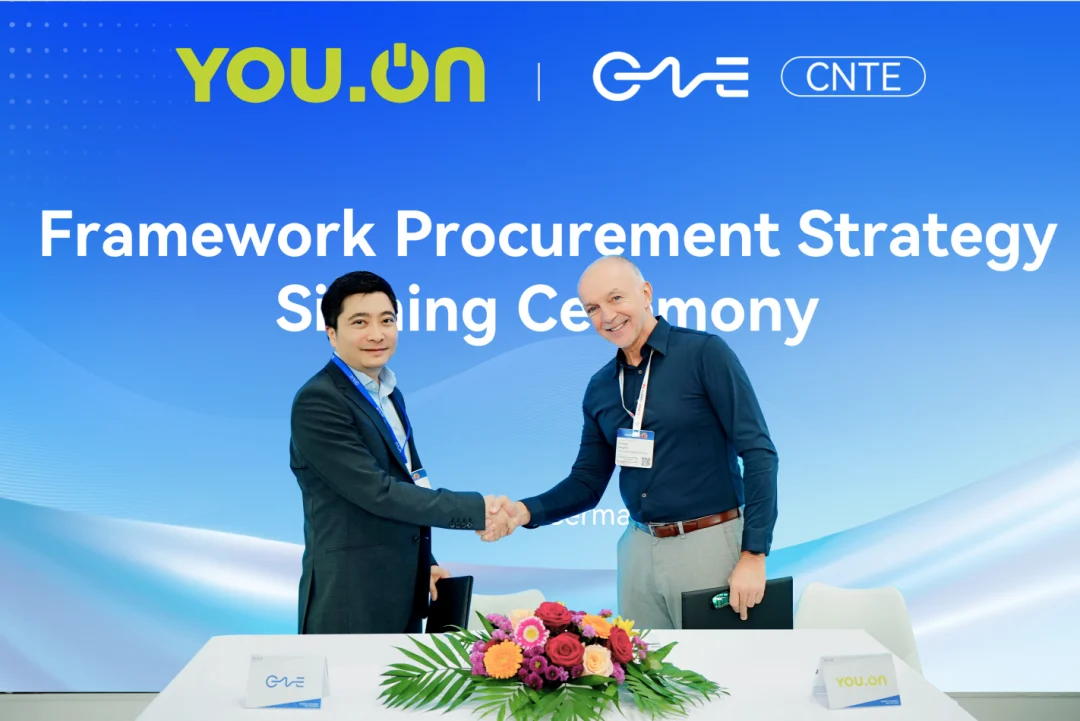
CNTE & YOU.ON Partner to Expand Storage Markets
May 19, 2025 -

CNTE Unveils Energy Storage Lineup at Solartech 2025
May 19, 2025 -
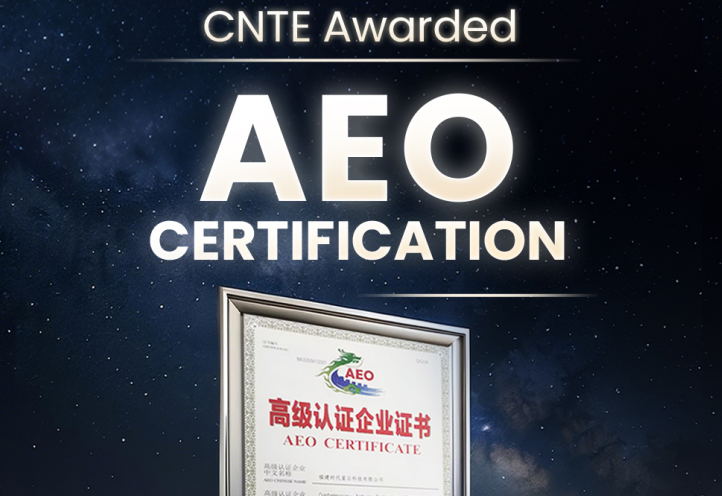
CNTE awarded AEO certification
Mar 14, 2025
Tags
- 500 kw battery
- 500 kw battery storage
- 500 kwh battery price
- 500 kwh battery storage
- 50kw solar battery storage
- all in one solar battery
- at home battery
- battery based energy storage
- battery capacity for solar system
- battery electric storage system
- battery energy storage system price
- battery pack for home solar system
- battery pack house
- battery pack kwh
- battery power storage systems
- battery storage applications
- battery storage device
- battery storage kwh
- battery storage price per kwh
- battery storage suppliers
- battery storage system design
- battery that can power a house
- battery to grid
- bess battery energy
- bess solar system
- better battery renewable energy
- buy battery storage
- buy solar battery storage
- charging station
- chinese solar batteries
- clean energy storage solutions
- commercial solar power battery storage
- cost of solar and battery system
- electric battery storage system
- electrical energy storage exhibition
- energy battery pack
- energy storage battery pack
- energy storage system lithium battery
- energy storage system price
- energy storage system solar
- energy tech battery
- ess battery price
- ess battery system
- ess solar battery
- ess solar system
- ev battery for solar storage
- ev battery solar storage
- green energy lithium battery
- high capacity battery for solar panels
- hybrid battery storage
- its technology solar
- kwh battery storage
- large batteries for solar storage
- large battery for solar energy storage
- large solar battery storage
- large solar battery storage systems
- large solar storage batteries
- largest commercial battery
- latest solar batteries
- lithium batteries for off grid solar system
- lithium batteries from china
- lithium battery for off grid solar
- lithium battery for solar system price
- lithium battery home storage
- lithium battery packs for solar panels
- new battery storage
- off grid solar battery storage
- on grid battery
- optical storage integration
- outdoor energy storage
- outdoor solar battery cabinet
- pcs battery system
- power pack energy
- power storage cells
- price per kwh battery storage
- q cell battery storage
- smart battery storage
- solar and lithium batteries
- solar batteries inside house
- solar battery battery
- solar battery container
- solar battery kwh
- solar battery module
- solar battery storage cabinet
- solar battery storage capacity
- solar battery storage container
- solar battery storage manufacturers
- solar battery to power house
- solar cell storage
- solar energy battery storage capacity
- solar energy battery storage system
- solar energy lithium battery
- solar energy storage system price
- solar energy storage technology
- solar ess system
- solar grid battery
- solar grid battery system
- solar installation battery
- solar one batteries
- solar panel battery storage capacity
- solar panel battery storage price
- solar panel energy storage battery
- Solar panel energy storage systems
- solar panel lithium battery storage
- solar panel power storage system
- solar plant battery
- Solar Power Plant Battery
- solar pv and battery storage systems
- solar pv system with battery storage
- solar storage solutions
- solar with battery system
- solar with lithium battery storage
- standalone energy storage systems
- storage energy battery
- storedge battery
