
Clean Energy Storage Solutions: Technology, Costs, and Commercial Value
The shift toward renewable power is no longer just an environmental goal; it is a financial necessity for many businesses. As grid prices fluctuate and stability becomes harder to guarantee, companies are looking for ways to secure their energy future. This is where clean energy storage solutions step in to bridge the gap between intermittent renewable generation and constant power demand.
For facility managers and business owners, the challenge isn’t just buying a battery. It is about integrating a system that handles peak shaving, load shifting, and emergency backup without inflating operational costs. Industry players like CNTE (Contemporary Nebula Technology Energy Co., Ltd.) have been instrumental in refining these technologies, ensuring that modern storage systems are safe, intelligent, and adaptable to various commercial scenarios.
This article explores the practical side of energy storage, breaking down the technologies, cost implications, and how to choose the right setup for your specific needs.

Why Clean Energy Storage Solutions Are Critical for Modern Grids
The electrical grid is undergoing a massive transformation. Traditional fossil fuel baseloads are retiring, replaced by wind and solar. While cleaner, these sources are variable. You cannot command the wind to blow when your factory shifts start at 8:00 AM.
Clean energy storage solutions provide the buffer needed to smooth out these irregularities. By capturing excess energy when production is high (and cheap) and releasing it when demand peaks, businesses stabilize their local microgrids. This capability is essential for “all-scenario” applications, ranging from EV charging stations to industrial manufacturing parks.
Without storage, renewable investments often yield diminishing returns because excess power is curtailed or sold back to the grid at unfavorable rates. Storage keeps that value in-house.
Comparing Core Technologies in Storage Systems
When evaluating storage, you will encounter several chemical and mechanical technologies. Understanding the differences is vital for calculating ROI.
Lithium-Ion Batteries (LFP)
Lithium Iron Phosphate (LFP) is currently the dominant chemistry for commercial and industrial (C&I) applications. Unlike the ternary lithium used in some high-performance electric vehicles, LFP offers a longer cycle life and higher thermal stability. This makes it the standard for most stationary BESS (Battery Energy Storage Systems). It offers a good balance of energy density and safety, which is why brands focusing on all-scenario solutions usually prioritize this chemistry.
Flow Batteries
For long-duration storage—where you need to discharge power for 10 or 12 hours—vanadium flow batteries are gaining attention. They are heavier and require more space than lithium systems, but they do not degrade as quickly over time. However, for most commercial businesses looking for a 2-to-4-hour backup or peak shaving window, flow batteries often present a higher upfront complexity and cost.
Solid-State Developments
The industry is closely watching solid-state batteries. By replacing the liquid electrolyte with a solid one, these batteries promise higher safety and density. While not yet widely available for mass-scale grid storage, they represent the next frontier in technology evolution.
Cost Factors and Pricing Variables
One of the biggest questions buyers have regarding clean energy storage solutions is the price tag. The cost is rarely just about the battery cells.
The Levelized Cost of Storage (LCOS)
Do not look at the capital expenditure (CAPEX) alone. You must calculate the Levelized Cost of Storage (LCOS). This metric considers the total cost over the system’s lifetime divided by the total energy discharged. High-quality systems might have a higher upfront cost but offer 6,000+ cycles compared to cheaper alternatives that fail after 3,000 cycles.
Balance of System (BOS) Costs
The inverter, cooling systems, fire suppression, and energy management software (EMS) make up a significant portion of the cost. A cheaper battery pack paired with a poor BMS (Battery Management System) can lead to efficiency losses or safety hazards. Companies like CNTE emphasize the integration of smart testing and management systems to ensure that the “Balance of System” adds value rather than becoming a point of failure.
Selecting the Right System for Your Scenario
Choosing a specification requires analyzing your load profile. An oversized system wastes capital, while an undersized one fails to prevent demand charges.
Power vs. Energy Applications
Determine if you need high power (MW) to start heavy machinery or high energy (MWh) to run lights and servers during a blackout.
- Power Applications: require fast discharge rates (C-rates).
- Energy Applications: require sustained release over hours.
Safety and Certification
Safety is non-negotiable. Look for systems that meet international standards like UL 9540A for fire safety. The integration of the battery modules with the Power Conversion System (PCS) must be seamless. Advanced suppliers often utilize rigorous testing equipment—a field where CNTE has strong roots—to validate that the storage system can handle thermal stress and electrical surges before it ever reaches the client site.
The Role of Intelligent Software in Energy Management
Hardware is only half the battle. The efficiency of clean energy storage solutions is largely dictated by the Energy Management System (EMS).
The EMS acts as the brain. It decides when to charge from the grid (when rates are low), when to discharge to the load (to avoid peak tariffs), and when to sell back to the grid.
In an all-scenario approach, the software must be versatile. It should handle:
- Virtual Power Plant (VPP) participation: Aggregating scattered storage units to trade energy.
- Microgrid Islanding: Automatically disconnecting from the main grid during outages to keep local operations running.
- Predictive Maintenance: Using AI to predict cell failures before they happen.
Modern solutions are moving away from manual controls. The system should operate autonomously based on pre-set financial parameters.
Future Trends and Commercial Outlook
As we move forward, the integration of storage with DC coupling is becoming more common. This allows solar panels to charge batteries directly without converting to AC and back, reducing efficiency losses.
Furthermore, the supply chain is maturing. We are seeing a consolidation of quality. Manufacturers are shifting from selling “boxes of batteries” to selling “energy stability.” This service-oriented approach helps businesses mitigate risk. Companies that combine battery manufacturing expertise with testing capabilities, such as CNTE (Contemporary Nebula Technology Energy Co., Ltd.), are well-positioned to support this shift, offering robust support throughout the product lifecycle.
In the coming years, we can expect higher density, safer chemistries, and smarter software to drive the cost down further, making storage a standard utility for every commercial building.
Final Thoughts on Implementing Storage
Adopting clean energy storage solutions is a strategic move that offers protection against energy inflation and grid instability. Whether you are running a data center, a manufacturing plant, or an EV charging hub, the technology is ready to deploy.
The key to success lies in proper sizing, understanding your LCOS, and selecting a partner who prioritizes safety and intelligent management. By focusing on quality and long-term cycle life rather than just the lowest initial price, businesses can turn their energy bill from a liability into an asset.
Frequently Asked Questions
Q1: What is the typical lifespan of commercial clean energy storage solutions?
A1: Most modern commercial storage systems using Lithium Iron Phosphate (LFP) technology have a lifespan of 10 to 15 years, or roughly 4,000 to 6,000 charge cycles, depending on the depth of discharge and operating temperature.
Q2: Can energy storage systems work without solar panels?
A2: Yes. While often paired with solar, storage systems can operate independently. They can charge from the grid during off-peak hours when electricity is cheap and discharge during peak hours to save money, a process known as energy arbitrage.
Q3: How much space does a 1 MWh storage system require?
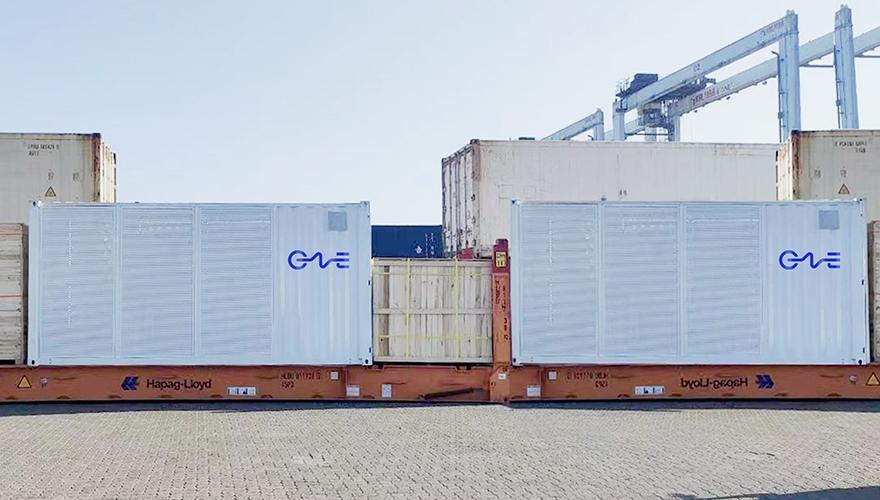
A3: A typical 1 MWh containerized battery storage system usually fits within a standard 20-foot shipping container footprint. However, additional clearance is required for cooling, maintenance access, and safety equipment around the unit.
Q4: What maintenance is required for a BESS (Battery Energy Storage System)?
A4: Modern systems are low maintenance but not “no maintenance.” Routine checks involve inspecting cooling systems (HVAC), checking air filters, verifying fire suppression system pressure, and monitoring the software logs for cell voltage irregularities.
Q5: How do I calculate the ROI for an energy storage investment?
A5: ROI is calculated by summing the savings from peak shaving (demand charge reduction) and energy arbitrage, plus any revenue from grid services (like frequency regulation), minus the cost of the system and maintenance. In markets with high electricity price volatility, payback periods can be under 5 years.
Get in Touch
Recent Posts




Tags
- 500 kwh battery price
- all in one solar battery
- at home battery
- battery based energy storage
- battery capacity for solar system
- battery pack for home solar system
- battery pack kwh
- battery power storage systems
- battery storage applications
- battery storage suppliers
- battery storage system design
- battery to grid
- bess battery energy
- bess solar system
- better battery renewable energy
- charging station
- clean energy storage solutions
- commercial solar power battery storage
- cost of solar and battery system
- electrical energy storage exhibition
- energy battery pack
- energy storage battery pack
- energy storage system lithium battery
- energy storage system solar
- energy tech battery
- ess battery price
- ess battery system
- ess solar system
- green energy lithium battery
- hybrid battery storage
- kwh battery storage
- large solar storage batteries
- lithium battery for off grid solar
- lithium battery for solar system price
- lithium battery home storage
- lithium battery packs for solar panels
- new battery storage
- on grid battery
- optical storage integration
- outdoor energy storage
- outdoor solar battery cabinet
- pcs battery system
- power pack energy
- price per kwh battery storage
- q cell battery storage
- smart battery storage
- solar and lithium batteries
- solar battery battery
- solar battery container
- solar battery module
- solar battery storage capacity
- solar battery storage manufacturers
- solar cell storage
- solar energy battery storage capacity
- solar energy battery storage system
- solar energy lithium battery
- solar energy storage system price
- solar energy storage technology
- solar ess system
- solar grid battery
- solar one batteries
- Solar panel energy storage systems
- solar panel lithium battery storage
- solar panel power storage system
- solar plant battery
- Solar Power Plant Battery
- solar pv and battery storage systems
- solar pv system with battery storage
- solar storage solutions
- solar with battery system
- solar with lithium battery storage
- standalone energy storage systems
- storage energy battery
- storedge battery
